

For the entire existence of the automobile, the manual transmission has been the choice for maximum performance and efficiency. It was the enthusiast’s choice because it gave the driver much more control over a car than did an automatic. The manual transmission has served the same function for around a century, but now things are changing big time.
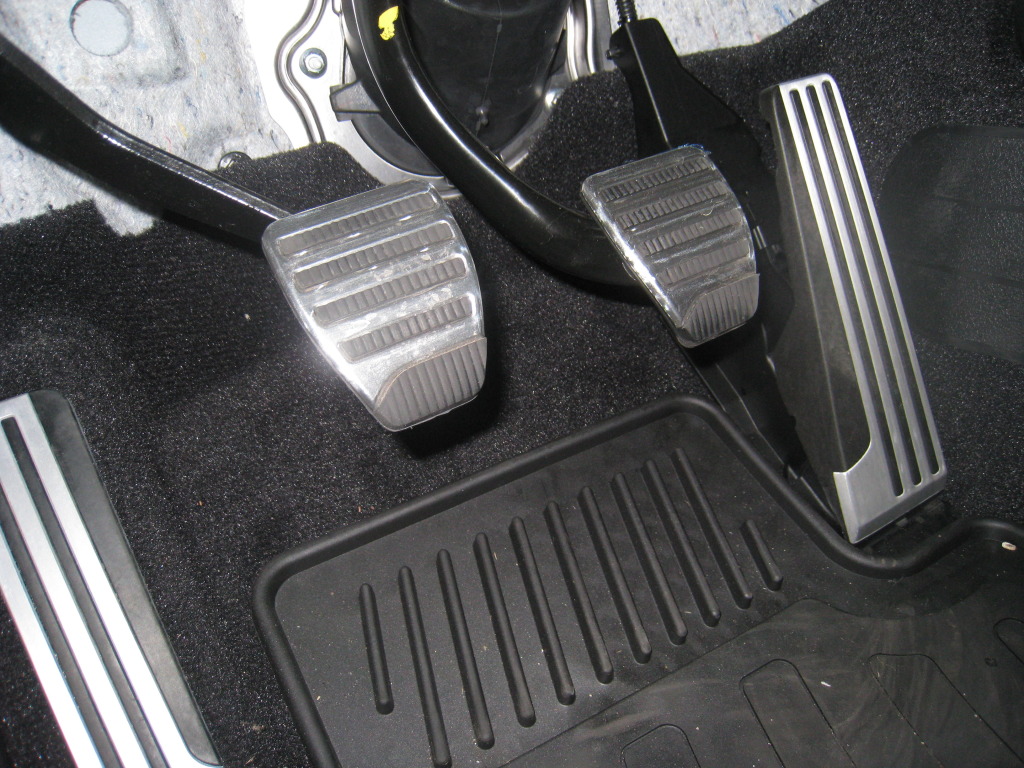
The 1990s saw the rise of the sequential manual transmission. Many early designs still used a clutch pedal, but on most road going cars, and more modern racecars, computers would operate the clutch automatically. Today’s road cars with sequential manual gearboxes are the result of this racing technology from a decade earlier. Often called “paddle shift”, it must be stressed that all of these cars do actually have manual transmissions, but the clutch is operated automatically. This is in contrast to the scores of more-mundane cars which feature “paddle shifters” that are just buttons controlling a normal slushbox automatic transmission. In a car with a real sequential ‘box, the difference can be felt immediately because you can feel the transmission working like with a manual.

Sequential gearboxes are directly threatening the existence of the classic manual transmission because they offer better performance and are more efficient, but also offer the option to have the car shift gears automatically on most offerings. This means you have the best of both a manual and automatic transmissions in one car, without many drawbacks. I can attest, having driven a few such cars, that at least 90% of the fun remains, even with the loss of the clutch pedal. In each of the paddle shift cars, I never felt myself wishing it had a clutch pedal, not once. I think this is because I still have full control of the gears, and the shifts do happen much, much quicker than any human could ever achieve. I also still felt completely engaged in the car, with the same mindset I get in a manual car (i.e. knowing what gear I’m in, and what RPM I’m at), not in some far off daydream state like with an automatic. Taking all of this into account, it isn’t hard to see the appeal of sequentials.

Sales figures have backed up this appeal, with Ferrari and Lamborghini discontinuing production of manual transmissions for certain models, or for the whole brand in Lamborghini’s case. This is due to extremely low sales volume of manual transmission–we’re talking under 10% of a production run that is only a couple thousand (or hundred) per year. These actions have struck fear into the hearts of purists all over the world, and it have caused us all to ask ourselves, “Is the manual transmission dying?”

My answer to this question would be, no. I believe it is just changing functions, going from being the fastest, most efficient choice in a car to being the most fun and pleasurable choice for enthusiasts. I think that manuals will die in the types of cars that mix sport and luxury at high levels and also in cars that are all about the highest, uncompromised performance because paddle shift offers only advantages in such areas. Demand has shown this to be true, seeing as how most supercars and GT cars are all paddle shift these days. Where I believe manual will live on, is in a market up to around the Porsche 911 Turbo or maybe even the GT3 so they won’t upset the purists. Mitsubishi and Nissan have both tried paddle shift options on their sports cars and neither has lost too many manual transmission sales like models did in the supercar range. This may be due to the fact that the 35-40k range is larger than the 200k range, or because cars at a lower level are purchased with a more general purpose of driving pleasure and are less about all-out performance.

There are many cars which I believe would benefit from offering paddle shift, but in my opinion certain cars need to always have a clutch pedal equipped, especially those that are focused more on the driving experience and overall pleasure. There is something uniquely intoxicating about operating a great car with a clutch pedal, and surely human skill is much more a part of driving a manual. There is a great art to driving a manual car properly, an art that has been mastered by the greatest racing drivers of the 20th century, and I want to hold onto this just as much as all of you purists out there.

At the same time though, I believe that dual clutch transmissions (DCTs) are the future for performance cars, and that the classic manual will become more of a side option on models where there still proves to be a demand for a clutch pedal. It is important to remember that car companies are businesses that serve at the pleasure of the consumer. This means that the fate of the manual transmission lies completely in the hands of car buyers alone. If you don’t want manual transmissions to die off, then go out and purchase a manual car. People must demand a manual transmission on their cars and not settle for a paddle shift model. If consumers settle for sequential transmissions on their cars, then the manual will meet it’s end, and that would be a shame. So, if you want to keep the clutch pedal, then it is on you as a car buyer to demand its survival.
-Nick
 Mind Over Motor
I agree with you for the most part. It comes down to rather you are going around a hairpin turn on a racetrack or rounding a bend in the mountains on one of the greatest driving roads in the world. On the racetrack I am going to want the performance of a DCT, but on the mountain road I would prefer the soul, passion, and fun of a pure manual transmission. That being said, Lambos and Ferraris are usually known for having that soul and passion in every car, however I’m seeing a lot of German automakers supporting the option of a standard manual gearbox (Porsche Turbo S, Audi R8, BMW M3) even on their models that are considered part of the “supercar” range while Lambo and Ferrari seem to be moving toward the DCT route. I find that a bit ironic lol.
LikeLike