

There have been rumors for a while now that Porsche will be replacing the six cylinder engines in their lower-end models with turbocharged four cylinders. This would follow their recent downsizing move with the Panamera S models, where they replaced the 4.6L V8 with a twin turbo 3.0L V6. Porsche already has a history with four cylinder engines from their 912, 924, 944 and 968 models, so this move would be far from unprecedented. I myself have a lot of personal experience with the topic at hand. I learned to drive on a Porsche 944 S2, the 7 years I have owned my Subaru STi have given me a lot of insight into the performance merits of turbocharged engines, and I have also sampled many modern Porsches through my work for this website. So putting all of this together, I feel I can offer a very well rounded opinion on this issue. I also have some wonderful ideas for where it could take things in the future.
First things first, downsizing and turbocharging is happening across the board. If you haven’t come to terms with that yet, then go off in the wilderness by yourself and muse on it until you find peace with the idea.
The rumors have it that the new power plant will be a 2.5L boxer motor with a turbo. Incidentally that is exactly what I have in my Subaru STi, and I can vouch that it does a far more than adequate job in terms of performance. The reality is that small turbo engines can suffice for most types of cars on the road, yes, even most high performance cars. My STi makes around 400bhp and 450ft/lbs of torque, and it has been totally reliable thus far. Reliability is certainly the main concern with factory products, but I think 400hp is certainly a reasonable capability for a boosted 2 liter engine. Even 500-600hp could theoretically work with forged internal parts. My point here is that outright performance does not suffer because of downsizing and boosting. If anything it becomes easier to get even more power from just basic upgrades. So all of you “no replacement for displacement” types can stop whining now.

In reality, I don’t think Porsche would even need to push the limits of what has been done for the cars they will put this new engine in. The Mercedes CLA 45 AMG makes 355hp from its 2.0L Turbo, and that is the same sort of power found in the current 991 Carrera. Variations of such a turbo four could easily be implemented in the Boxster, Boxster S, Cayman, Cayman S, 911 Carrera, and should probably replace the V6 in the base Panamera and Cayenne as well. So in this light, you should be able to see why Porsche wants to make this move: it will be useful in every car they make.
Those of you who still have doubts, just realize the basic facts: This move would yield similar or greater horsepower, a lot more torque, noticeably better fuel efficiency, and cleaner emissions for all of the models in question. That said, I do dread the thought of the Porsche 911 no longer having a flat six with a glorious linear powerband, so maybe it would be best if they leave their signature model alone. For all of the others, though, I think having a turbo four is probably a good idea, especially for the Panamera and Cayenne.
The most recent rumor details a turbo 2.5L boxer four that will have around 250hp and 360ft/lbs of torque. While just speculation, this will obviously only work for the base Boxster and Cayman, but that may be a good place for Porsche to start. It will leave the S models for the purists, and will give other people more of a reason to buy the base models as well (tuning potential). Overall, I like the notion and I trust Porsche to do it properly.

But wait, there’s more!
The other part of this rumor pertains to the supposed 2.5L four banger being used in a new, sub-Boxster sports car. I take this to mean the possible return of a 944 style car, one that is front engine, rear drive, and impeccably balanced. I have some thoughts on this proposition as well.
The Problem
Porsches are generally quite expensive, and that’s even before options are fitted. This car will surely cost less than the $50k base price of the Boxster, but will almost certainly cost a lot for what it is. This 944 successor will also have to avoid stepping on the toes of both the Boxster and 911 in terms of performance. That likely means the base model will have a naturally aspirated version of the 2.5L with 200-220hp, and the “Turbo” model will share the Boxster’s 250hp version. In a nutshell, the base model would be like an overpriced Scion FRS, and the Turbo model would cost the same as a Nissan 370Z while offering far less performance.
Obviously this is all a big problem. To price a car below the Boxster, Porsche will also need to compromise their level of build quality, as well as not offer most of their expensive options. Even so, the fact that this car is a “Porsche” will add a substantial premium to its price, thus making it less plausible from a business sense. With all of this said, I think I have a different idea on how to make this 944 successor work.
The Solution
Make it a Volkswagen.
This may sound odd, but hear me out. I don’t believe the VW group currently has a front-engine-rear-drive chassis, so in either case they would need to build one. Making this car a VW would give it a much better place in the market, and also a far larger customer base.
Making the 944 successor a VW also gets rid of any competition worries with existing Porsche models because the client base does not overlap. A VW Golf R has similar power to a Boxster for way less money, yet Boxsters still get sold because nobody is cross shopping the two. This would open up the 944 successor’s ability to properly compete with its rivals. The naturally aspirated base model could be priced against the Scion FRS and Mazda MX5. The Turbo model could now have more power, say maybe the same ~330hp version of the 2.5L also found in the Panamera and Cayenne that I discussed earlier. With that sort of power, the Turbo version of this new sports car would take aim right at the likes of the Nissan 370Z at a similar price point.
So where does Porsche still come in? Well, Porsche is a part of the VW group, and VW has access to their people. The chassis and handling of this new car should be developed by Porsche engineers. It is a big selling point, and will ensure that the car is a dynamic masterpiece. All the mechanicals and dynamics of the car would be from Porsche, and VW could fill in everything else with parts bin stuff to keep the price low. VW already has a large enthusiast customer base, and new sports car would surely be a hot commodity while still being different enough from the likes of a GTI not to steal sales.
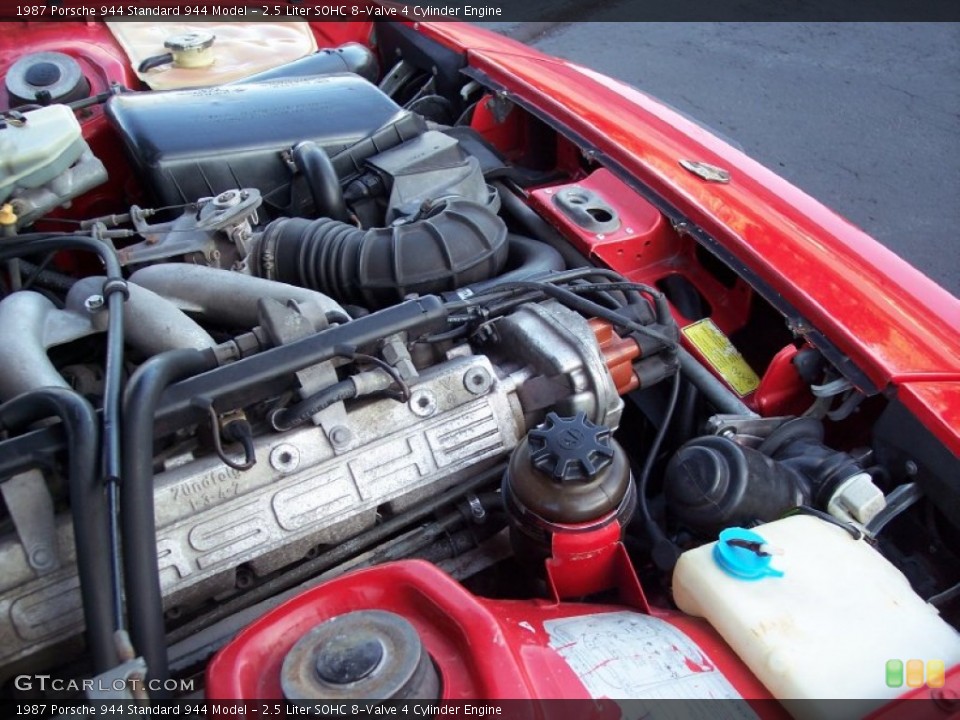
So in a nutshell, instead of making the 944 successor a disgraceful Porsche, they should make it an incredible Volkswagen. Using the VW name allows it to be a far better car because it won’t compete for Porsches customers, yet it will be a Porsche in everything but its namesake… mechanically speaking. Being a VW, it can also have cheaper fit and finish, and will not add a premium to its price just for having a Porsche badge on its hood. This will bring the price down to a competitive level, giving it a much wider customer base, and making it more financially viable for the VW group to develop.
If that doesn’t make sound business sense, then I don’t know what does. Either way, though, I think Porsche implementing turbo four cylinders into their lineup could be a very good thing for them, as well as the larger VW group as a whole.
-Nick Walker
 Mind Over Motor