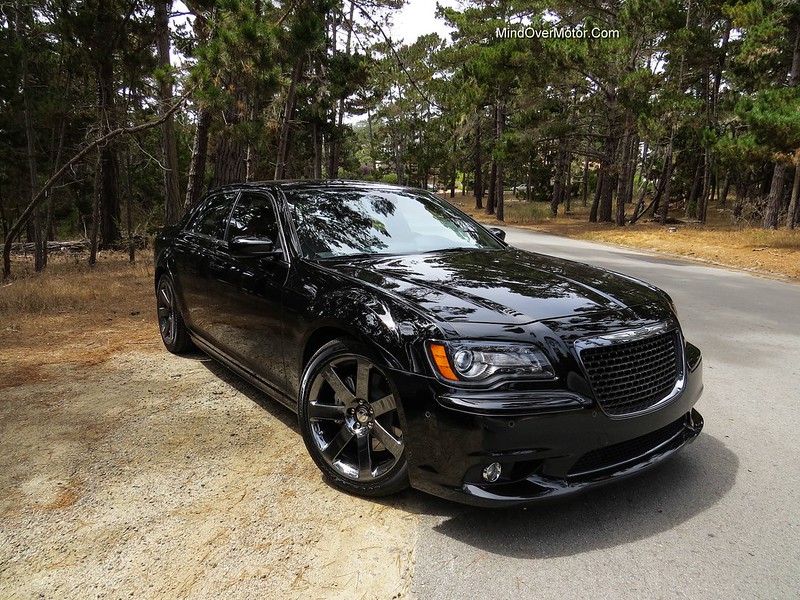
Chrysler’s SRT lineup screams for attention these days. The Challenger SRT appeals to the little kid inside of us, even if it’s not as dynamically capable as the competition. The SRT Viper has the bedroom poster market cornered for the company (even if sales aren’t great right now) and the Jeep Grand Cherokee SRT is a screaming deal. Meanwhile, the sole Chrysler product to wear the badge, the 300, sits in the corner of the showroom and doesn’t seem to get a lot of attention. At Pebble Beach, the first car I took out on the Seventeen-Mile Drive was this icy black 300 SRT. I wasn’t sure what to expect, but after a lot of thinking, I believe I have an answer.
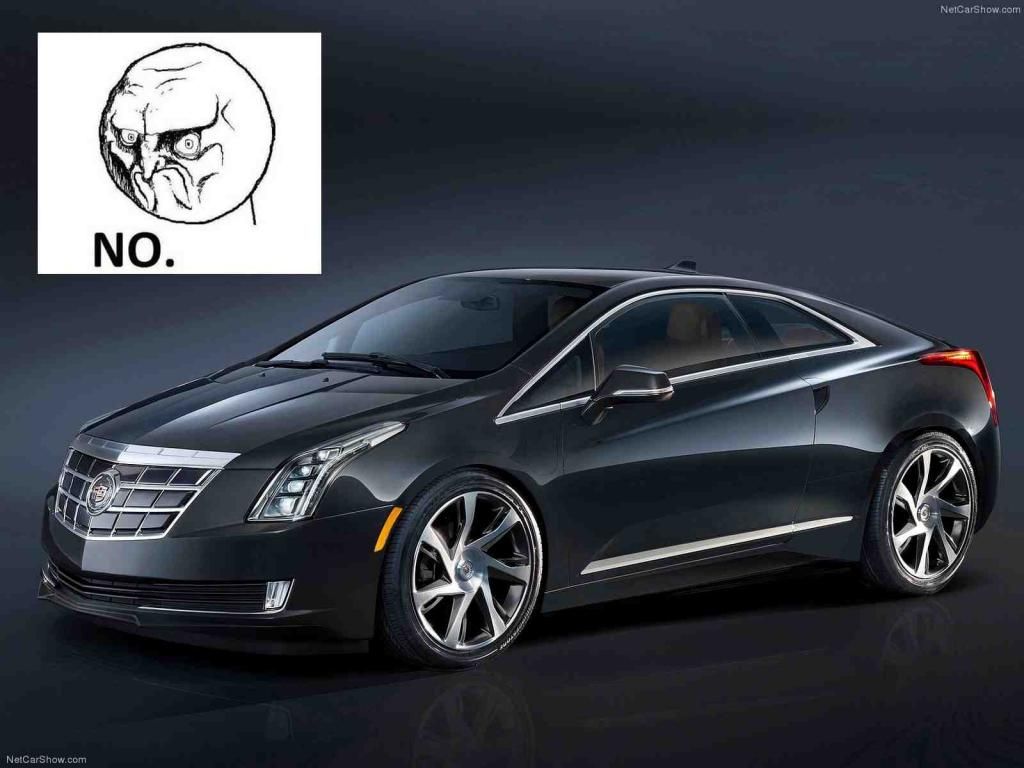
It’s like that quote from The Godfather, “Just when I thought I was out, they pull me right back in!” GM has shown a lot of promise recently, Cadillac in particular with the new CTS and its turbocharged V6. Of course, in true GM fashion, such applaudable brilliance must be subsequently balanced out by some action of unfathomable idiocy. Ladies and gentlemen, I give you the $76,000 Chevy Volt, which Cadillac refers to as the ELR.
Lets get this straight, the whole entire reason that the Chevy Volt hasn’t sold well is because it is too damn expensive. Like $40,000 in a world where its competition cost $25,000. So naturally GM’s brilliant marketing people had a meeting and said, “I know what will really sell well. Let’s make a Volt with a Cadillac body on it and make it double the price!”
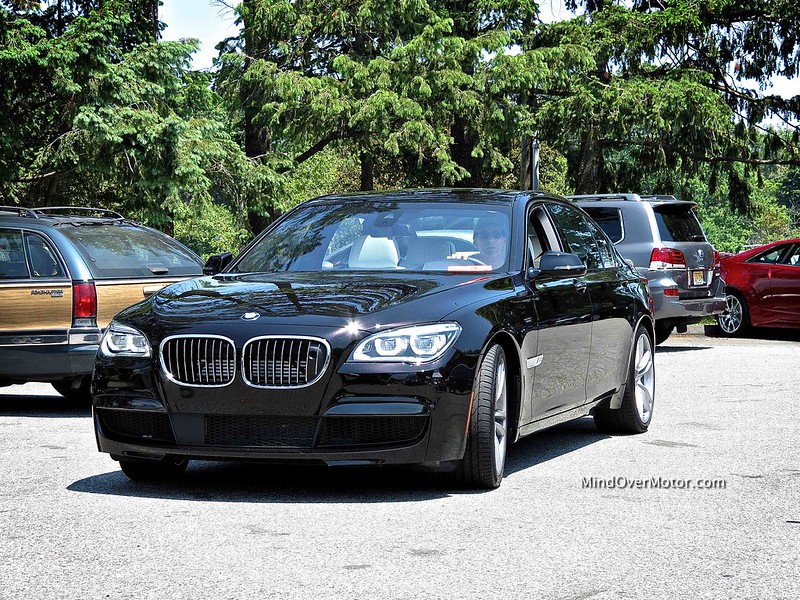
The 7 Series is the flagship model in the BMW lineup. A far cry from a zippy little M3, the 7 Series has always had its focus on being a luxury cruiser. It competes in the top of the line limousine class against the likes of Mercedes’ legendary S Class, a car which has set the standard of automotive luxury for sometime now. In order to take on such formidable opposition, BMW has had to use some clever ingenuity to make the 7 Series appealing, and it doesn’t get more appealing than the top two models we have here.
In one corner we have the Alpina B7, an upgraded vehicle that has been factory sanctioned. Alpina has had a long relationship with BMW as a third party tuner, similar to AMG and Mercedes before they were officially brought together in 1990. Alpina models are usually marketed as alternatives to cars from BMW’s M Division, but in this case, there is no BMW “M7”, so the Alpina B7 is as close as you can get.
Of course, you might instead fancy having the ultimate 7 Series that BMW makes themselves. That would be our other contender, the BMW 760Li. It is a more traditional take on a top-end luxury limousine with a proper V12 under its hood.
Top Gear has, over the years, been very good at explaining why they have their opinions. However, this is one time where they may not be right in my eyes. The Lexus SC430 has a lot of reasons behind it for being underwhelming. But, crucially, it never really ruined a nameplate. Lexus may have made a mess of the SC nameplate, but people are still buying everything else they make. The SC was bad, but it wasn’t a car that actually sent a brand into a tailspin. That, friends, represents far greater levels of failure–a level of failure that, in my opinion, has only been seen once or twice. However, I’m looking for a car that was bad for the same reasons as the sacrilegious Lexus, but did the job of destroying a reputation. Continue reading Top Gear was wrong. The Lexus SC430 was by far not the worst car ever.→
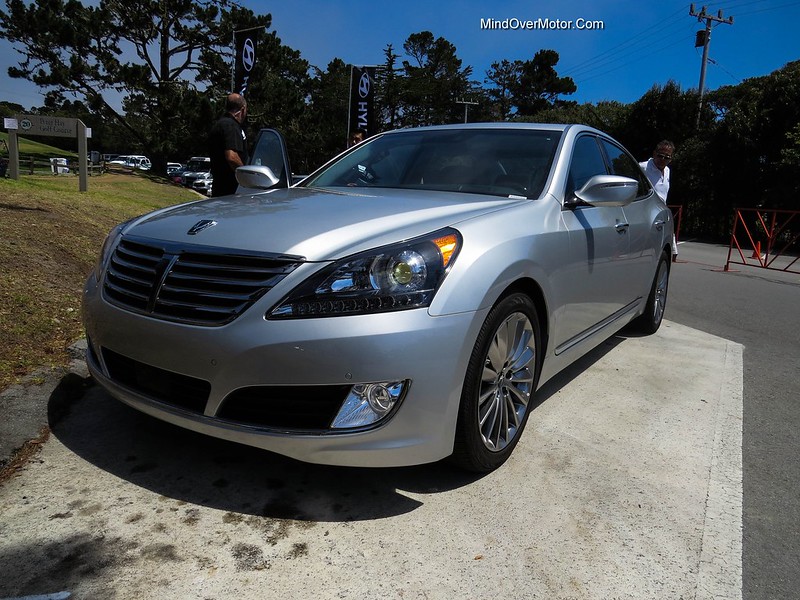
Hyundai has no secrets in its intentions. Since 2009, this company has managed to make itself look leagues better than almost everyone. When one company screws up in the news, Hyundai has a positive headline on the same page of the local newspaper. Somehow, they can make the entry-level Accent and Elantra and sell them in the same dealers as the high-end Genesis sedan, as well as the subject of this review, the flagship Equus. No other car company can sell a range as diverse as this under the same franchise roof. Hyundai bills the big Equus as a car to fight the S-Class for a much lower price. On paper, that’s quite a clear truth, but I had to drive it to see if that advertising line lives up to its billing.
Infiniti just seems to want to watch the world burn. For some reason they deemed it a good idea to rename their whole entire lineup, for no reason whatsoever. Every Infiniti is now named Q, with some meaningless number. The car you see here is the new Q50, the replacement for the current G37 sedan. As the replacement for the G, which is surely Infiniti’s best selling model of all time, the Q50 has big shoes to fill. This one isn’t an ordinary Q50, though, this is the much-anticipated Q50 Hybrid. So in addition to filling the G37’s shoes, the Hybrid must also make a case for itself in some new territory.
Briefly looking back, the G35 was the car that really launched Infiniti into what it is today. It was based on the same platform as the Nissan 350Z, making it a true 4-door sports car. What resulted was the car that gave the BMW 3 Series its most formidable challenge to date.
Boy has the world changed a lot since the G35 first came out. The emphasis in the luxury market is now on multitasking, both from the car and from the driver. A car needs to be comfortable, but also sporty enough for you to weave in and out of traffic at 90mph while you’re updating your Facebook status and texting your friends. The pure focus on driving is all but dead at this point, even BMW has made that obvious. While luxury cars must still be dynamically capable, and “fast”, the priority for most buyers is now on cool gadgets and hypothetical fuel economy numbers.
Looking at the Q50, especially the Hybrid, it is easy to see that it is a car built for our modern world. I must confess, that when I actually drove the car, I knew very little about it. Since my drive, I have been doing a lot of research to help with this article, and I am finding that the Q50 Hybrid may, in fact, be one of the most interesting cars on the market.
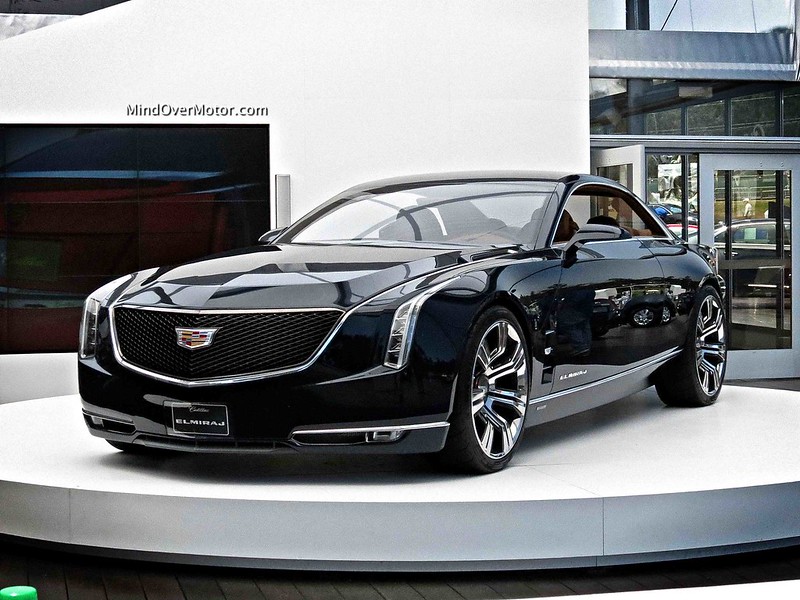
We got to see Cadillac’s Elmiraj Concept at the Pebble Beach Concours d’Elegance, and plainly, this is the sort of thing the Cadillac Brand needs right now. Cadillac has not been “the Cadillac of cars” since the mid 1960s in my opinion, and it’s about time they step up and reclaim their original status in the world.
The Elmiraj looks to be a grand touring car of world class standards. It’s design is unmistakably that of a Cadillac, but it has a nice sleek, modern shape. While I doubt it would make it to production in its current form, the Elmiraj’s interior is breathtakingly gorgeous, with gratuitous amounts of wood, leather and metal used throughout.
As far as what’s under the hood, I’ve heard rumors of a twin turbo 4.5L V8 with more than 500hp. That will most likely put the Elmiraj in competition with the Jaguar XKR, Maserati Granturismo, BMW 650i/M6, etc, in the price range around $100,000. That, of course assumes that Cadillac will ever have the guts to actually produce an ambitious concept car such as this.
I think with proper execution, a production version of the Elmiraj would do a lot to put Cadillac back where they need to be as a brand. The ATS, CTS, and the CTS-V have done a lot to show that Cadillac has potential, but they need a capstone, a mighty flagship to lead their assault. I know Cadillac’s track record with concept cars is awful when it comes to anything making it to production, but I am really holding out hope that the Cadillac Elmiraj is not indeed a mirage.
Jaguar is on a serious roll lately. They have gone from a company that was on its back to a company that everyone is watching very closely in less than 6 years’ time, thanks to a few new models, a new parent company, and a large amount of development money that’s been spent effectively. I’ve been waiting 2 years to drive another Jaguar XJ after taking a used one out for a spin in North Jersey. While I was with Nick at the Pebble Beach Concours, that wait ended abruptly with the roar of the 550hp XJR. I had to ask: Is this car worth its price and will it be on a new level of performance compared to the old XJR? I took the wheel of this silver-grey 2014 model around the 17-Mile Drive to find out. Continue reading Test Driven: 2014 Jaguar XJR (Grade: A)→
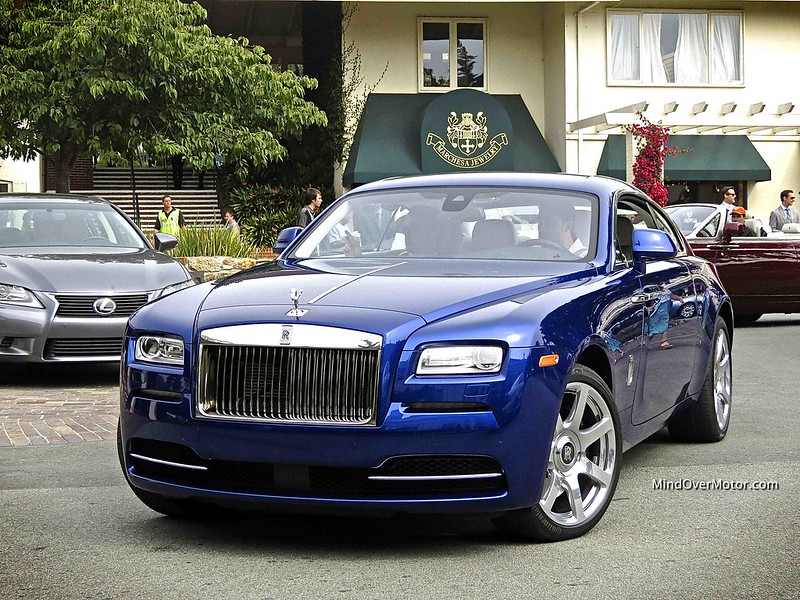
Back when Rolls Royce and Bentley sailed under the same flag, it was often said that a Bentley was a car to drive and a Rolls Royce was a car to be driven in. The two companies have now been split up for over a decade, with Bentley owned by Volkswagen and Rolls Royce under BMW. Since their separation both brands have had to branch out a bit, but for Rolls Royce, branching out has come to mean venturing into some unexplored territory.
Rolls Royces have traditionally been focused on the concerns of their rear occupants, aiming to preserve comfort at all costs, even if the chauffeur goes completely mad. The car you see here, Rolls Royce describes as being a “gentleman’s grand tourer”, and the most powerful car they’ve ever made. It is the new Rolls Royce Wraith, and no part of it has anything to do with being chauffeured. The Wraith is a driver’s Rolls Royce, and to many, that may seem a vast ideological conflict.
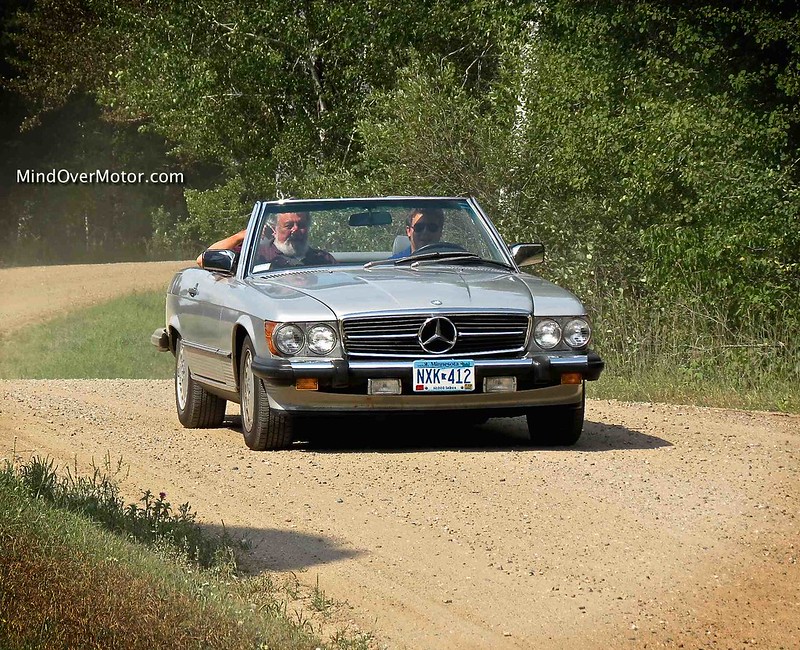
Recently my family and I went up to Minnesota and visited my Great Uncle Bill. It was my first time at Uncle Bill’s house, a beautiful log cabin that he built with his own hands. Uncle Bill is a bonafide car guy, who still owns the Ford Model T that he bought when he was in the 8th grade. He also has another Model T, a Model A, and the silver Mercedes 560 SL you see here. After showing me around the garage, he asked if I wanted to take a drive in the Mercedes. Me being me, wanting to drive anything and everything, I jumped at the opportunity. Nice day, beautiful car, and some solid quality time with my uncle Bill, the situation was pretty ideal.
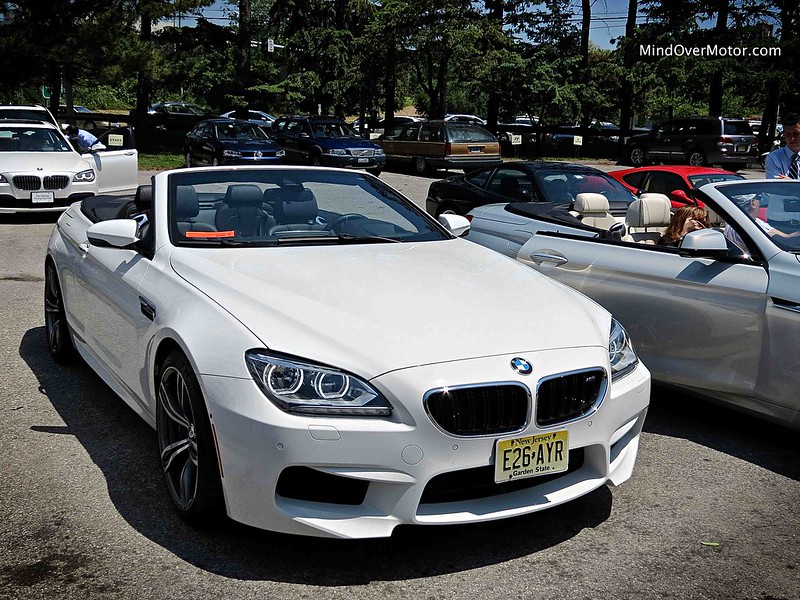
The M6 has been extremely controversial for me, and I have often been quite negative about it in the past. My central issue is the sort of idealistic clash between what the M-badge stands for, and the fact that this new M6 weighs in at a behemoth 4600lbs. As the flagship high performance car for a company who claims to make “The Ultimate Driving Machine” this raises, for me, not only the question of validity, but also the question of integrity.
BMW’s M Division has made some of the greatest driver’s cars of all time, but now I have to question if their name holds the same distinction as it used to. Judging things on paper is always just half the story, though. I really needed to drive a car for myself before I could pass full judgement on it. Luckily, I was recently afforded the opportunity to get behind the wheel of this M6 Convertible. So, it’s time to drop the gavel.
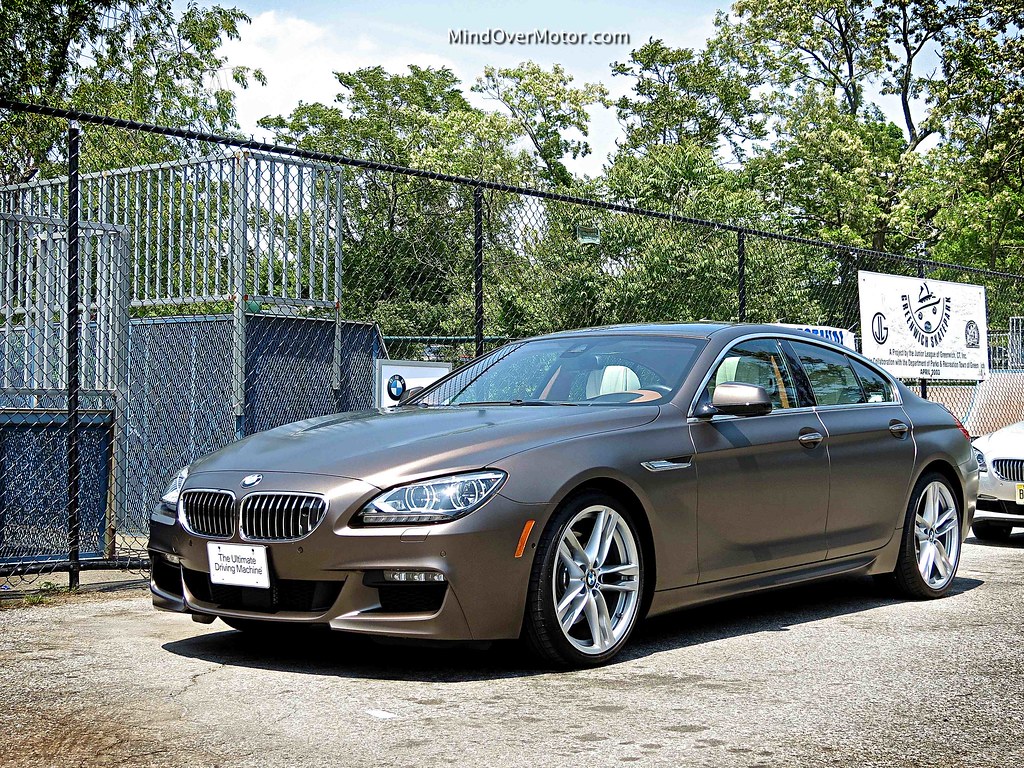
This is the new face of BMW, a big “do-everything” sort of luxury car aimed at a niche market. We enthusiasts love to complain about the direction BMW has been going, yearning for the days of the E30 M3 to come again. The truth is those times are long gone, and BMW’s new direction is now both well-established and quite successful. Many of BMW’s attempts at finding new segments have been regrettable, the X6 and 5 Series GT made me gag. So the big question here is, where does the 6 Series Gran Coupe stand? Is it finally a good product of the new BMW, or is it just another attempt by BMW’s bean counters to try and make themselves feel important?
The car I drove was a 650i xDrive, the second highest model in the Gran Coupe range (only the mighty M6 is higher). This is a car that sits right at the top of the executive car range, one that those who’ve ascended the corporate latter might buy with their holiday bonus.
One thing this car is not trying to be, though, is a supercar. That is the M6’s territory, and it brings with it further issues. The 650i, on the other hand, is just a luxury car, jumping into the coupe-sedan segment originally founded by the Mercedes CLS. It is in this context that we should judge it.





 Mind Over Motor