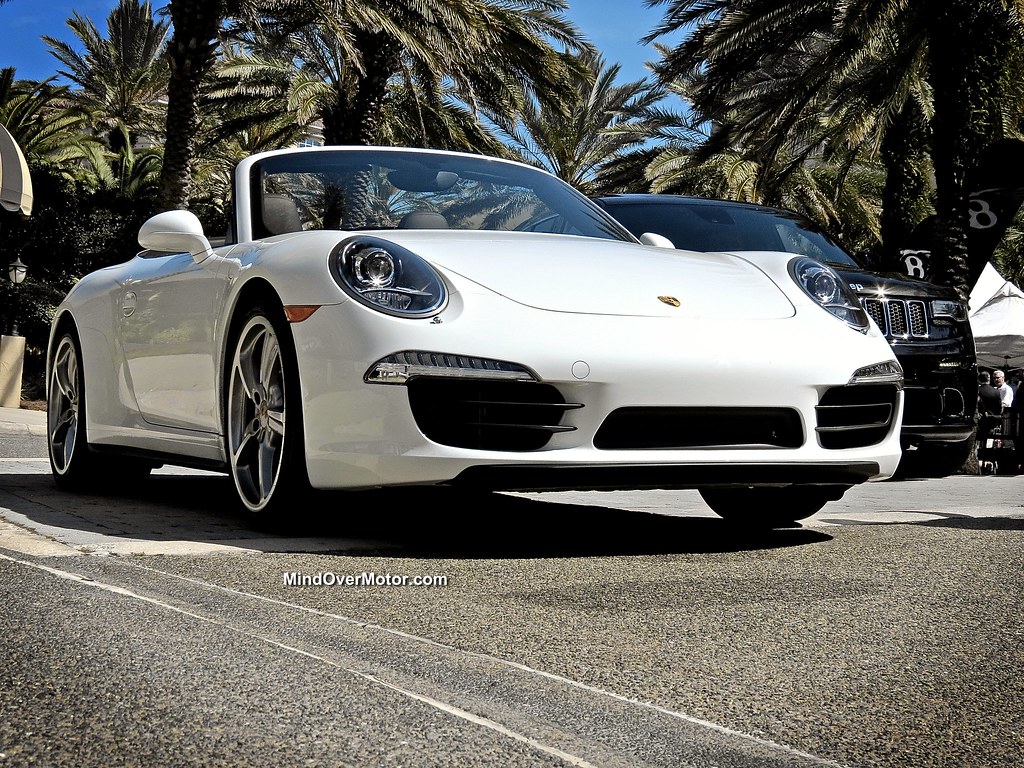
Porsche enthusiasts are some of the most dreadfully conservative people you’ll find when it comes to their favorite cars. Any change to the 911, large or small, gets heavily scrutinized to the n’th degree. All too often, they let their nit picking blind them, and they often wind up missing all of the new 911’s great aspects. The evolution of new models is a necessary fact of life, and it usually makes the car better overall, otherwise Porsche wouldn’t do it. The new 911, the 991, has followed this same trend, being criticized every which way against older Porsche models. I chose a more positive approach. Not, “how is the 991 worse than its predecessors?”, but “how does the 991 faire as a modern 911?”
Drive’s Chris Harris tests the Porsche 918 on the track in its final stages of development. He also brings up some good points about technology, and what it means for a hypercar.
In this segment of Drive’s Chris Harris on Cars, Chris pits the Porsche 997 Turbo S, the new Audi R8 V10 Plus, and a Litchfield tuned Nissan GTR against each other on the road and track. Enjoy.
Yes, this is a little BMW Isetta 600 with a supercharged V8 strapped to the back of it. I saw this car a few times over the course of my summer in Detroit, Michigan, and it was a showstopper every time. I finally caught up with the owner at the Woodward Dream Cruise, and he was hppy to tell me about the car. From what I can remember it has a supercharged Rover V8 and puts down around 300rwhp. That is a staggering amount for such a small car, and even more staggering for those tiny tires. The owner said he doesn’t really drive it fast because it cannot handle well with all that rearward weight, but as a cruiser it turns more heads than anything on the road. Obviously this BMW hot rod is completely unique, with custom airbrushing on top of its custom mechanical setup. This is just a fun car all around, and it was awesome to see in person. Enjoy the gallery.
Porsche just released official details on the new 2014 991 Turbo and Turbo S, and as with any new Porsche there is of course controversy. Reading through people’s reactions, I have seen a lot of “It’s slower than the old 997 Turbo S” comments, and there are tons of complaints about there being no manual gearbox being offered. I’d like to address these concerns.
Regarding the 2014 Turbo S being “slower than the old one”, you have to realize that Porsche official performance claims are always, and I mean always, conservative. For the 997 Turbo S, Porsche officially claimed 0-60 in 3.2sec and 530hp. In reality, the 997 Turbos S could achieve 0-60 in 2.6 sec, the 1/4 mile in 10.6 sec, and its power was more in the region of 600hp.
Porsche claims the 991 Turbo and Turbo S have 513hp and 552hp, respectively. Add 10-15% to each of those numbers and you can estimate the more realistic power output. The EU has a tax on manufacturers relating to horsepower numbers, so most European cars are a bit underrated on paper. With around 560hp in the Turbo and around 620hp in the Turbo S, I think it is safe to assume these cars will not lose ground from their predecessors in terms of all out, Bugatti Veyron rivaling, performance.
This brings us to the transmission issue. The new 991 Turbos are available with PDK only. Many people are against not having a manual option on pure principle, but having actually driven a 997 Turbo S myself, I’m going to have to side with Porsche on this one. The pace of these new 911 Turbos has gotten ridiculously rapid, everything from raw acceleration to lap times. The simple fact of the matter is that a manual transmission would be a major weak point in every aspect of the car’s performance at this point. An Achilles heel-toe… if you will.
Also, I would venture to say that most people complaining have never sampled a Porsche with PDK for themselves. It is a phenomenally good transmission, in my opinion the best dual clutch gearbox on the market. It feels a lot more mechanical, and connected than a standard automatic gearbox, and it offers a level of versatility that a traditional manual cannot. In reality, most 911 Turbo owners use their car as a Grand Tourer, so this versatility (auto or manual modes) is important. I have sampled PDK on a few different Porsches, and it really is a “do everything” sort of transmission, great for both tearing up corners and sitting in rush hour traffic. The 911 Turbo has long been hailed as the supercar you can use everyday, and PDK only makes it better in that regard.
That said, I do love a Porsche with a manual gearbox, but at this point I think it is better to have it just on the “more pure” naturally aspirated models. In all honesty, I am far more pissed about there being no manual option on the new GT3 because that is supposed to be the “purest” Porsche driving experience.
As for the rest of the 991 Turbo, I think it is exactly what it should be. I love how it looks, and I’m sure the performance will be truly staggering. I cannot wait to get my grubby little paws on one for a road test.
Looking back through my photos from our visit to the 2011 Pebble Beach Concours d’ Elegance, I realized there is a ton of solid material that we somehow have not gotten around to featuring yet. I figured I’d kick it off with the fastest car in the world, which we were fortunate enough to see two of, along with few other more plebeian Veyrons. One was even the famous “World Record Edition”, with its orange and carbon color scheme. This was right after the Veyron Super Sport had set the production car speed record of 268mph, so seeing these two 1200hp beasts together was an absolute thrill. I know I may give the Veyron a hard time in the past, but that is mostly because of the types of people who buy them. The car itself I admire immensely for the technical marvel that it is, and yes, I would probably consider doing some terrible things if it meant I could drive one…. if only for a few minutes. But for now, these pics are as close as I’ve gotten, so let’s just enjoy them. These were shot as I was in the process of learning proper photo composition, so they are a but hit and miss, but overall I think they came out well. Enjoy.
After an early wakeup, an unexpected overnight stay, and a bus trip I’d rather not talk about, I found myself amongst the thousands of others who had also flocked to 2013’s edition of the New York International Auto Show. Having endured the exhausting trials of the trip to the Big Apple and being dragged to a late-night Broadway show by mom (although seeing Ferris Bueller in person can’t necessarily be complained about), I was ecstatic to finally be standing with the sorts of cars that I had only previously seen in pictures and read about in magazines.
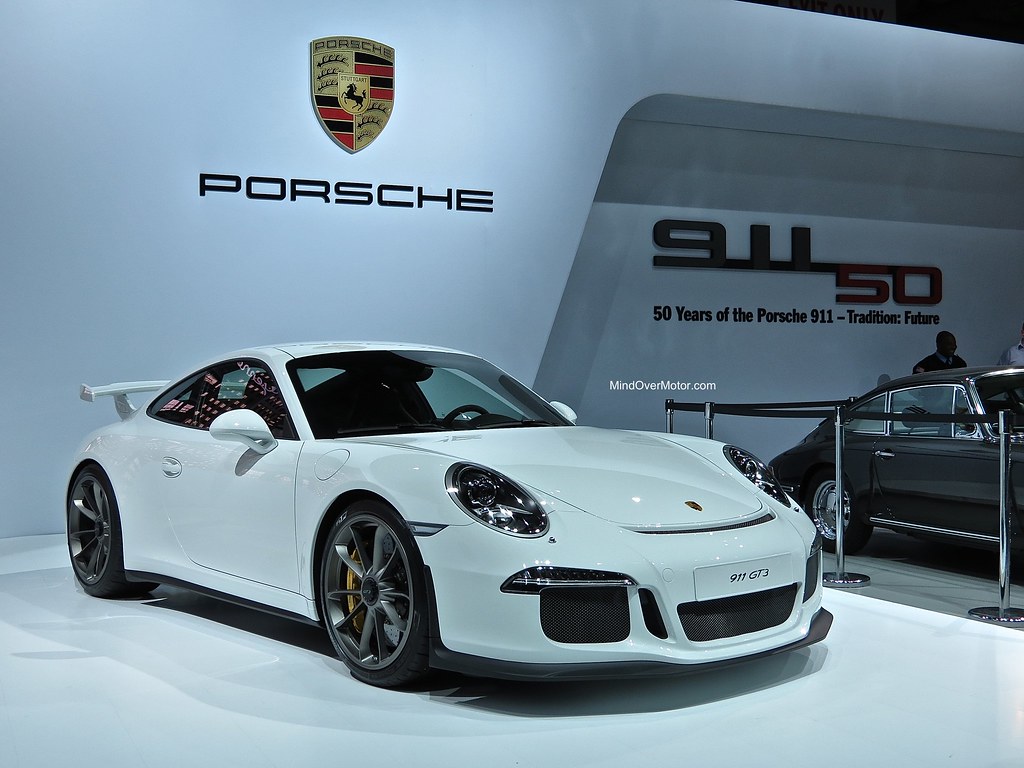
One car in particular stood out among the rest; that controversial Porsche 991 GT3 has been the topic of an immeasurable amount of cooler talk conversations. Granted, it doesn’t look all that different from the 997 GT3, but the knowledge of all the differences under the body frame was what made seeing the car in person so special. So, after cramming my cell phone’s memory card full with photos of the car, I took a moment to stand back and examine the car – including a gander into the tinted windows to take a peek at those notorious paddle shifters.
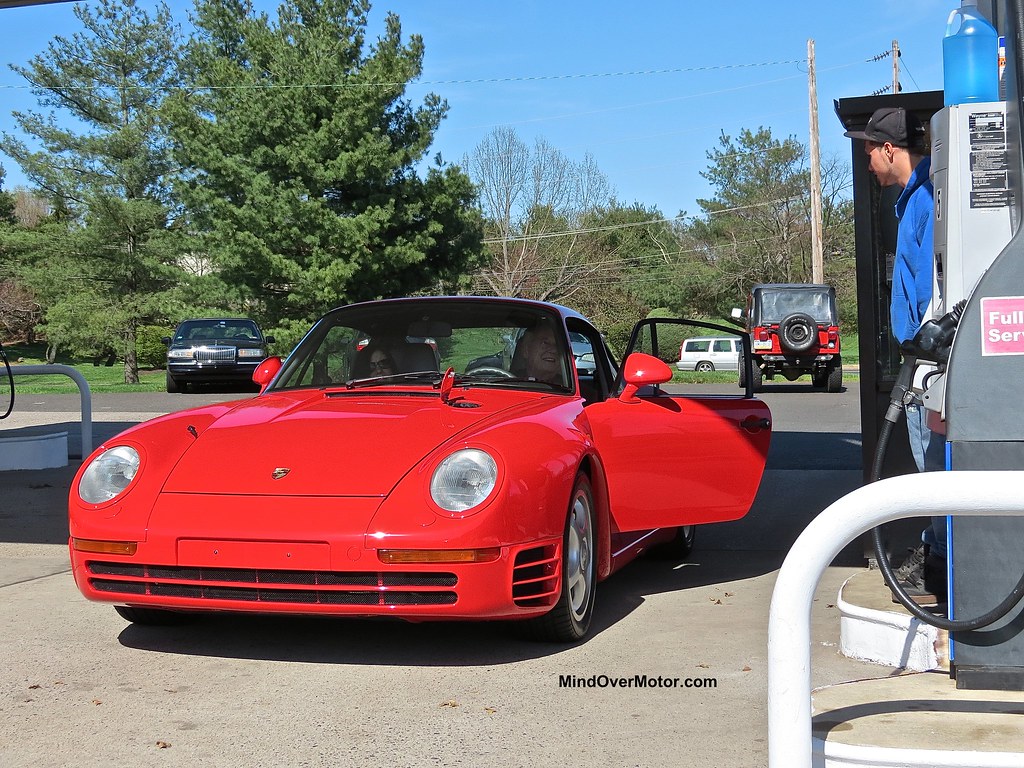
While on the way home from the tuner meet on Sunday, I noticed a red Porsche at a gas station. At first glance it was just a bright red 911, but then I noticed the vents on the bumper….. this was no 911, this was a 959! I quickly pulled into the gas station and snapped this pic. The owner was very nice, and was surprised that I knew it was a 959. This is quite a rare car, with only around 337 being built worldwide. I have seen this particular car before at shows in the area, but it was quite a thrill to catch it out in the wild.
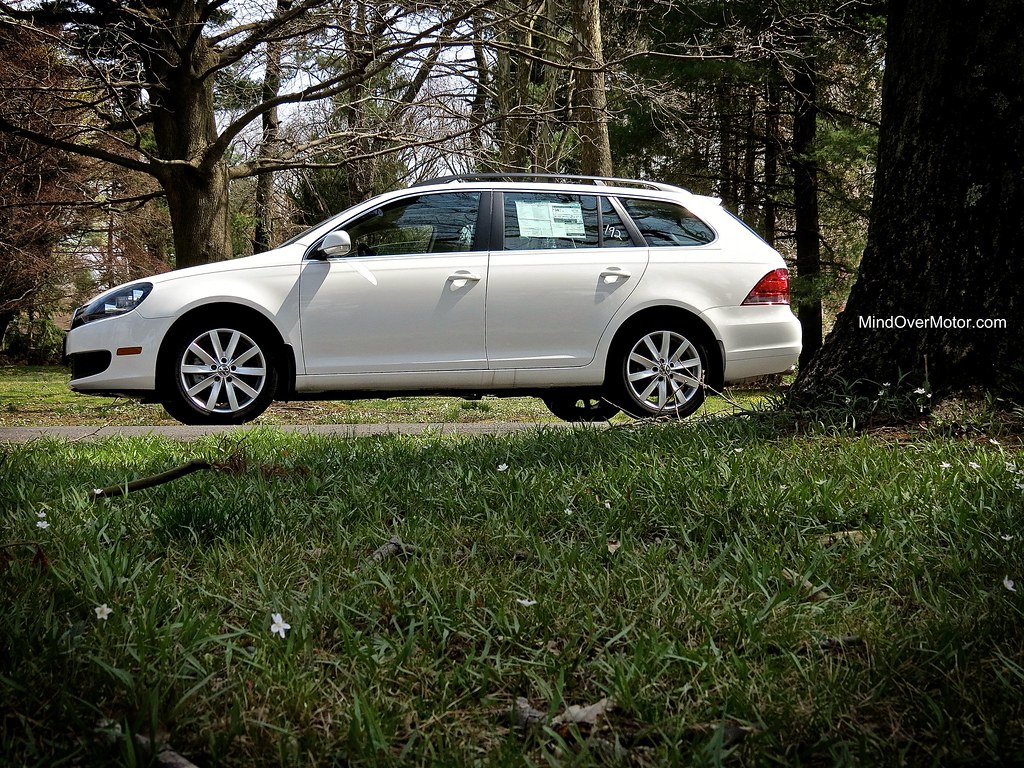
Most American car buyers would reject this straight away. As a wagon, it still carries the “neutered” stigma developed in the era before minivans. As a diesel, it is different, and therefore is terrifying. And as a manual, most people could not operate it, and would not be bothered to learn. So the Jetta Sportwagen TDI cannot possibly appeal to the mass droves of uninterested laymen, and that means it must be pretty good. This is a thinking person’s car, and among high MPG wagons, it is by far the enthusiast’s choice.
You see, not all enthusiast cars need to be about high performance. They just need to be engaging for the driver in performing a given task. Practicality and fuel efficiency define the main purposes of the Jetta Sportwagen TDI. It is undoubtedly a car that will be daily driven, and used for all manner of tasks. As a wagon that can see over 40mpg, its only real competitors are the Toyota Prius V and the Ford C-MAX. Obviously those are both hybrids, so the VW’s approach is quite different from theirs.
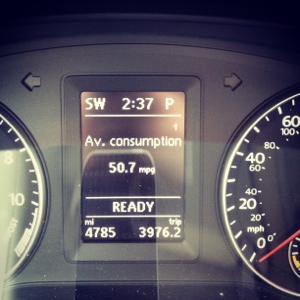
I have been getting many questions about the real world fuel economy of the VW Jetta Hybrid. I figured I would share this to give people an idea of what is possible with smart attentive driving.
On my trip to class today, roughly 40 miles on back roads with lots of hills and corners, I averaged 50.7 mpg. That is almost 3mpg more than the EPA says the maximum highway mileage is for this car. I did this not by “hyper mile-ing”, but by driving normally and paying attention to the car’s systems in conjunction with my surroundings. I stayed within 5mph of the posted speed limit as well, as to keep things realistic. Weather was around 60 degrees F, with a light breeze.
Our car has just under 5000 miles on it now, and is just getting fully mechanically broken in. When we first got the car we were seeing averages in the lower-mid 30s, and MPG has steadily increased as we have put miles on the car.
Now, keep in mind I was trying to drive as efficiently as reasonably possible, so I was paying special attention to how much throttle I was using, and planning when to use the gas motor to keep the battery charged. I have found that when I drive the car like i normally drive, typically 10-15mph over the speed limit, then the car seems to average more in the high 30mpg range. The Jetta Hybrid is turbocharged, so your mpg depends mostly on your right foot. It is pretty quick, especially for a car capable of 50mpg, but realize that there is a big tradeoff between using its performance abilities and getting “great” fuel economy.
That said, this is definitive proof that the VW Jetta Hybrid will deliver its claimed fuel economy in the real world, so long as it is driven properly.
Edit: I drove home using the same methods, this time on an all highway route, and saw 48.3mpg, exactly what VW claims. It is more difficult to “sail” on the electric motor at highway speeds, especially with the varied terrain in my area. I was able to coast on downgrades, but in general there were less opportunities for the electric motor to do its thing, and more traffic to deal with. My average for the day wound up being 49.5mpg, much higher than the EPA’s stated average of 45mpg. I think the Jetta Hybrid’s true fuel economy potential (with good driving) is more like 51 mpg in town and country driving, and 48mpg on the highway. Again, this is all staying within 5mph of the posted speed limit. It is both a realistic and acceptable driving style, but if you let your lead foot get the best of you then you will see you mpg drop off.
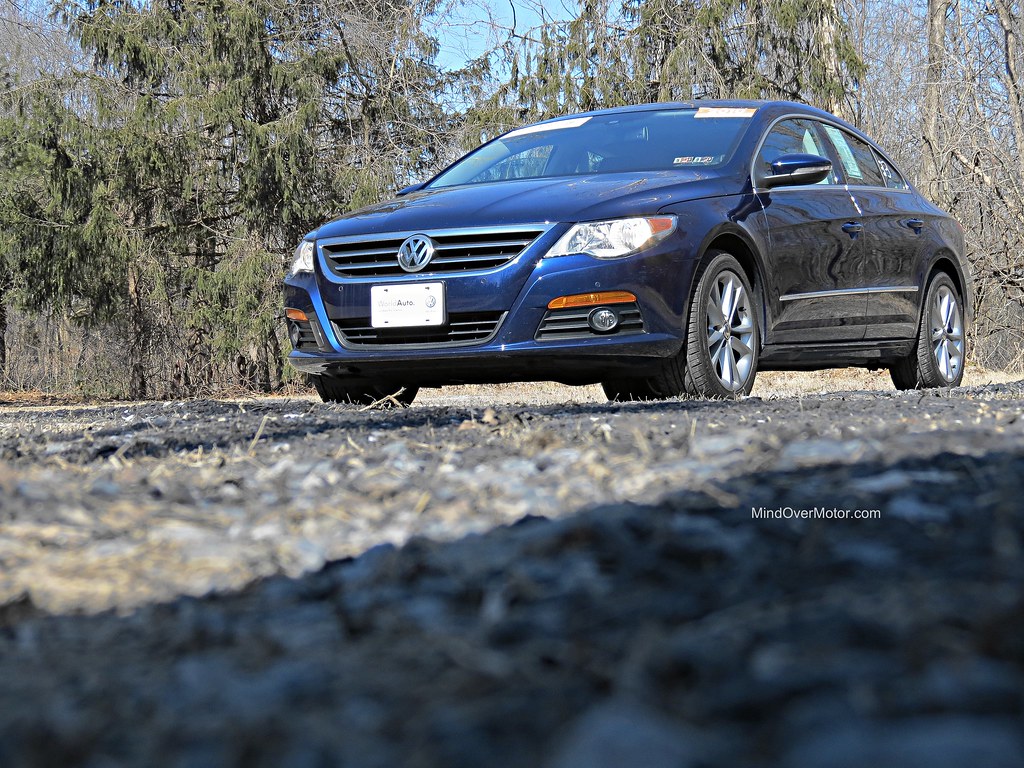
Volkswagen had a bit of genius when they built the CC. Obviously they took the coupe-sedan idea from the Mercedes CLS, but unlike the Mercedes, the CC was generally affordable. It sold like hotcakes because, while underneath it was just a VW Passat, its exterior appearance was nothing short of magnificent. Now many of the early CCs are coming off lease, and are available on the secondhand market for what seems to be a great value. So now the question is, what lies under the CC’s pretty facade, and is it worth spending your money on?
I should disclose that I am considering getting myself a CC like this one, so this drive was as much for me personally, as it was for this article. I love having two sports cars, my Subaru STi and Mazda Miata, but lately I have wanted something a bit more comfortable for daily driving. It would be nice to have a car I could go places in, and not have a little devil on my shoulder, constantly telling me to break the law. That said, I don’t want some gutless econobox either, I want a proper luxury car. Continue reading Test Driven: 2010 VW CC 2.0T (10/10)→
There have been rumors for a while now that Porsche will be replacing the six cylinder engines in their lower-end models with turbocharged four cylinders. This would follow their recent downsizing move with the Panamera S models, where they replaced the 4.6L V8 with a twin turbo 3.0L V6. Porsche already has a history with four cylinder engines from their 912, 924, 944 and 968 models, so this move would be far from unprecedented. I myself have a lot of personal experience with the topic at hand. I learned to drive on a Porsche 944 S2, the 7 years I have owned my Subaru STi have given me a lot of insight into the performance merits of turbocharged engines, and I have also sampled many modern Porsches through my work for this website. So putting all of this together, I feel I can offer a very well rounded opinion on this issue. I also have some wonderful ideas for where it could take things in the future.




 Mind Over Motor