Recently, I was reading the May 2013 issue of European Car that featured a Lamborghini Gallardo on the cover. The horsepower figure said 1200. That is a smorgasbord of power. But this wasn’t the first time I’d seen such powerful cars being exhibited. I’ve come across various YouTube videos of 1,200 horsepower Lambos, 900 Horsepower GTRs, the list just goes on; name any supercar and I’ve probably seen a 1,000 horsepower version of it somewhere.
On paper, these monstrous machines seem awe-inspiring, the type of car that has the sort of performance to make the hair on the back of your neck to give a standing ovation. But in the real world, well it’s a bit of a different story.
Porsche just released official details on the new 2014 991 Turbo and Turbo S, and as with any new Porsche there is of course controversy. Reading through people’s reactions, I have seen a lot of “It’s slower than the old 997 Turbo S” comments, and there are tons of complaints about there being no manual gearbox being offered. I’d like to address these concerns.
Regarding the 2014 Turbo S being “slower than the old one”, you have to realize that Porsche official performance claims are always, and I mean always, conservative. For the 997 Turbo S, Porsche officially claimed 0-60 in 3.2sec and 530hp. In reality, the 997 Turbos S could achieve 0-60 in 2.6 sec, the 1/4 mile in 10.6 sec, and its power was more in the region of 600hp.
Porsche claims the 991 Turbo and Turbo S have 513hp and 552hp, respectively. Add 10-15% to each of those numbers and you can estimate the more realistic power output. The EU has a tax on manufacturers relating to horsepower numbers, so most European cars are a bit underrated on paper. With around 560hp in the Turbo and around 620hp in the Turbo S, I think it is safe to assume these cars will not lose ground from their predecessors in terms of all out, Bugatti Veyron rivaling, performance.
This brings us to the transmission issue. The new 991 Turbos are available with PDK only. Many people are against not having a manual option on pure principle, but having actually driven a 997 Turbo S myself, I’m going to have to side with Porsche on this one. The pace of these new 911 Turbos has gotten ridiculously rapid, everything from raw acceleration to lap times. The simple fact of the matter is that a manual transmission would be a major weak point in every aspect of the car’s performance at this point. An Achilles heel-toe… if you will.
Also, I would venture to say that most people complaining have never sampled a Porsche with PDK for themselves. It is a phenomenally good transmission, in my opinion the best dual clutch gearbox on the market. It feels a lot more mechanical, and connected than a standard automatic gearbox, and it offers a level of versatility that a traditional manual cannot. In reality, most 911 Turbo owners use their car as a Grand Tourer, so this versatility (auto or manual modes) is important. I have sampled PDK on a few different Porsches, and it really is a “do everything” sort of transmission, great for both tearing up corners and sitting in rush hour traffic. The 911 Turbo has long been hailed as the supercar you can use everyday, and PDK only makes it better in that regard.
That said, I do love a Porsche with a manual gearbox, but at this point I think it is better to have it just on the “more pure” naturally aspirated models. In all honesty, I am far more pissed about there being no manual option on the new GT3 because that is supposed to be the “purest” Porsche driving experience.
As for the rest of the 991 Turbo, I think it is exactly what it should be. I love how it looks, and I’m sure the performance will be truly staggering. I cannot wait to get my grubby little paws on one for a road test.
The recession had a serious effect on the American automobile market. We all know what happened to the Big Three. However, there are a few small Japanese companies that are definitely worth mentioning because they seem to hang on either by a thread, or by a sizable rope, in the US domestic market. Subaru, Mazda, Suzuki, and Mitsubishi are the four non-major Japanese players in the US market. Well, they were. One of these four announced late on November 5, 2012 that they were pulling their automotive arm from the US market. So, allow me to say…and then there were three. But soon, I think there will be two. Continue reading Why Suzuki is out of the car market in the USA, and why Mitsubishi is next.→
After an early wakeup, an unexpected overnight stay, and a bus trip I’d rather not talk about, I found myself amongst the thousands of others who had also flocked to 2013’s edition of the New York International Auto Show. Having endured the exhausting trials of the trip to the Big Apple and being dragged to a late-night Broadway show by mom (although seeing Ferris Bueller in person can’t necessarily be complained about), I was ecstatic to finally be standing with the sorts of cars that I had only previously seen in pictures and read about in magazines.
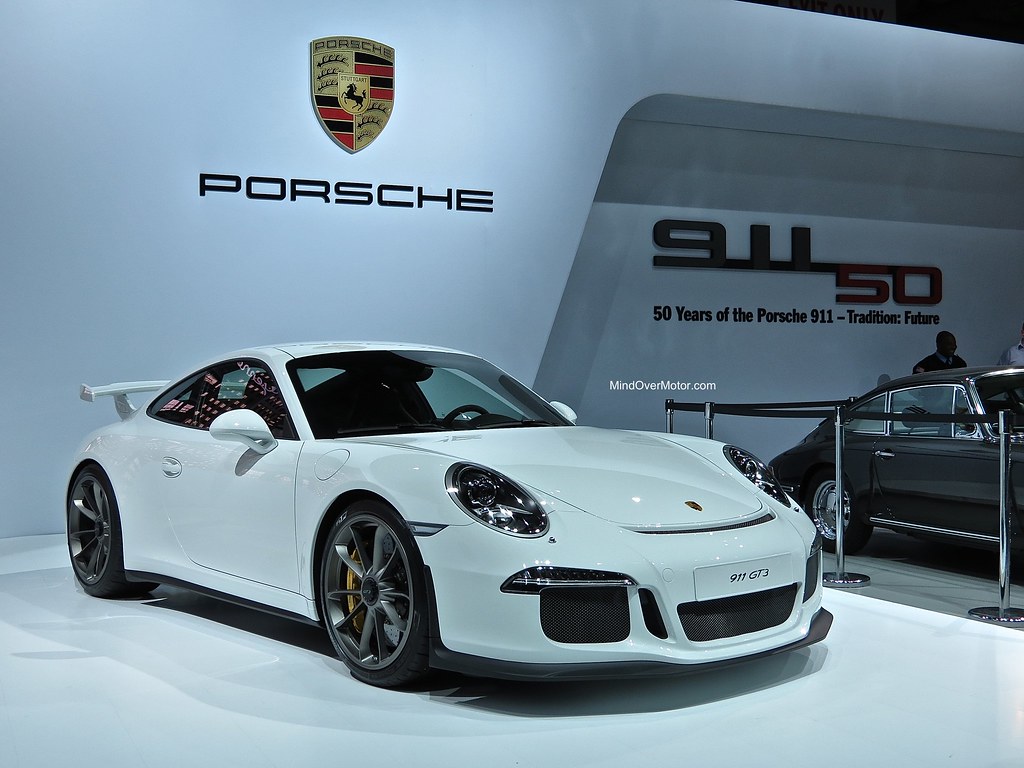
One car in particular stood out among the rest; that controversial Porsche 991 GT3 has been the topic of an immeasurable amount of cooler talk conversations. Granted, it doesn’t look all that different from the 997 GT3, but the knowledge of all the differences under the body frame was what made seeing the car in person so special. So, after cramming my cell phone’s memory card full with photos of the car, I took a moment to stand back and examine the car – including a gander into the tinted windows to take a peek at those notorious paddle shifters.
#4 Corvette at the Sebring 24 Hours, courtesy of Motor Trend
If you watched the 2013 Sebring 12 Hour race, you already know that Corvette won. If you didn’t watch the 2013 Sebring 12 Hour race, the vibrant, yellow Corvettes with the brutal and grunty V8 engines won the 61st edition of the 12 hour endurance race held in Florida every year. However, if you watched the race, you also know that in order to win, Corvette Racing had to endure some nerve-wrecking technical difficulties rather early on in the event that forced the #3 Corvette Racing car to retire. Luckily, the #4 team was able to look past the problems of their sister car and provide an exhilarating final few hours on their march to victory while ‘Vette Racing lovers slowly but surely recovered from their mini heart attacks.
It also, however, caused me to think a bit about the growing change in the complexity of racing cars. And unfortunately, not all teams have been able to overcome non-driver-error technical difficulties like Corvette Racing did, resulting in disappointment among the team’s fans and racing lovers alike (let alone the team itself). With that being said, I asked myself: ‘Is there too much technology in today’s racing cars?’
There have been rumors for a while now that Porsche will be replacing the six cylinder engines in their lower-end models with turbocharged four cylinders. This would follow their recent downsizing move with the Panamera S models, where they replaced the 4.6L V8 with a twin turbo 3.0L V6. Porsche already has a history with four cylinder engines from their 912, 924, 944 and 968 models, so this move would be far from unprecedented. I myself have a lot of personal experience with the topic at hand. I learned to drive on a Porsche 944 S2, the 7 years I have owned my Subaru STi have given me a lot of insight into the performance merits of turbocharged engines, and I have also sampled many modern Porsches through my work for this website. So putting all of this together, I feel I can offer a very well rounded opinion on this issue. I also have some wonderful ideas for where it could take things in the future.
Jaguar has quite a storied history with regard to sporting automobiles. The E-Type is still remembered and revered as one of the most beautiful cars ever made (even Enzo Ferrari admitted to this at one point). But, this story isn’t about the E-Type, or the XJ6, or the modern Jags that people lust after. This is about what I see as a potential diamond in the rough–the last generation of the venerable Jaguar XJS, a car that I think is a bit overlooked. Continue reading Secondhand Saint: 1992-1996 Jaguar XJS→
There were many new cars revealed at this year’s New York International Auto Show. I was in attendance for the Preview Night last Thursday, where I had access to many new cars, both those revealed at the show and those from recent shows. Like every event I go to, I covered what caught my eye. As many of you may know, I don’t do news in the proper sense because I like to be a little more authentic. What follows are my impressions of the cars as I saw and experienced them at the show, and my opinions of them overall. Enjoy, and please let me know your thoughts on any of them in the comments.
It is no secret that cars have been getting bigger. In BMW terms, the current 3 series is the size of an old 5 series, and the current 5 series might as well be a 7 series (it’s on the same platform). Audis too have been getting larger, although not to the same staggering degree as BMWs. Many of us enthusiasts now long for the way cars used to be, wanting the compact size and similar packaging as models that are 10 or 20 years old. Audi’s new A3, which will be hitting US shores, seems like it might be exactly what we are yearning for.
Specifically I want to look at the Audi S3, the hot and spicy one that we all really want. Looking at the details, it seems very similar to the B5 Audi S4 of the early 2000s. A car that is well loved by enthusiasts despite some rather large flaws. On paper the B5 S4 looks like a great car, with a 250hp turbocharged V6, all wheel drive, a good suspension, all in the package of a typical sedan. However, these S4s have had some pretty serious reliability problems, including turbos that fail around 70k miles and quirky electronics. The B5 S4 is a great car if you have the money, and patience to deal with its issues, but I think we all wish it didn’t have those issues in the first place.
Controversy isn’t rare when it comes to the automotive industry. There’s not a manufacturer on earth that hasn’t made something that, to put it nicely, didn’t quite stick. However, I think it’s fair to say that we’ve not seen such a controversial topic as Porsche’s new 991 GT3 for quite some time.
Now if you’ve for some reason had your head fully submerged in a pit of mud, let me explain why this new GT3 is so controversial. Recently, Porsche has been equipping it’s freshest sports cars with the company’s own PDK gearbox. Along with the new electric power steering, Porsche’s latest creations have received quite an earful of complaints from nostalgic Porsche fanboys concerning the paddle-shifters located behind the shining steering wheels. And when Porsche came out and said that the new GT3 would also be equipped with the PDK twin-clutch gearbox, the automotive world’s close followers erupted into an immense amount of complaints about the car.
Even after evo magazine released an almost twenty minute long interview with Porsche GT3 head Andreas Preuninger, and other online magazines also did their best to convince the growing population of groaning car enthusiasts that the car could still be great, many still remained unconvinced (keeping in mind that no one’s actually driven the car yet).
However, the new GT3 is not alone. It seems that the conversion of manual ‘box cars to semi-automatic, paddle-shifting machines is a growing trend in the realm of sports cars. Car after car, more and more companies are pressing on and equipping drivers with the flappy paddles as standard, and sometimes, it is the only option. So, taking this into careful consideration, what can be said about the future of the sports car? Where will manual ‘box cars be within the next two decades? Where will paddle-shifting cars be within the next twenty years? It’s a growing concern among many, and they’re all dying to find the answer.
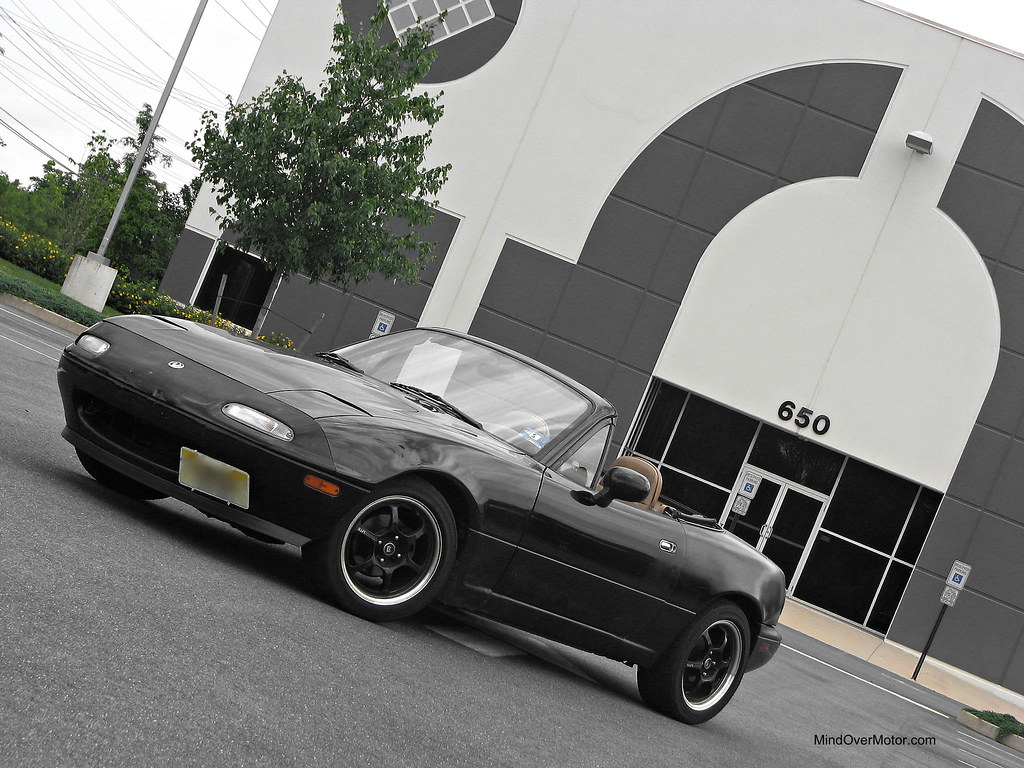
Today was the first day of Spring, and the weather, while still a bit chilly by most standards, was nice enough to take my MX5 Miata out for some roofless fun. I met up with my friend Dan, whose photos have been featured on this site many times, and we went for a nice long drive, two Miatas tearing hard through the woods. This was one of those days where you just forget everything else in your life, and enjoy cruising along. For me, such cruising is like a form of meditation, very in the moment, and focused on enjoying the little things in life. An MX5 allows you to enjoy the world even more, because with the top down you are truly outside, connected with your surroundings. Toward the end of the drive I had a huge grin on my face, and I got to thinking about exactly what it is that makes this car so great, for so many people. Continue reading Mazda MX5 Miata, the enthusiast’s Ace in the hole→
Cadillac will be releasing the next generation CTS at the upcoming New York International Auto Show, but the big news is under that car’s hood. With the CTS Cadillac is finally jumping on board with their European competitors, and offering a strong turbocharged power plant. Specifically, Cadillac has strapped two turbochargers to their 3.6L V6 to make an engine that will compete with many of the European twin turbo V8s.
This new 3.6T is extremely important because it will make its way into all of Cadillac’s current cars. As of now, Cadillac has said it will be in the top-line CTS model, but below the V, which will still have a V8. The new 3.6T (slightly detuned) will also make it into the XTS, a car which I had criticized for having the wrong engine. The change to the 3.6T could make all the difference in the XTS, giving it a more relaxed, more powerful nature that is proper for a big luxury car. Also, heavy in the rumor mill, and all but officially confirmed, is the implementation of this new 3.6T in the upcoming ATS-V.








 Mind Over Motor