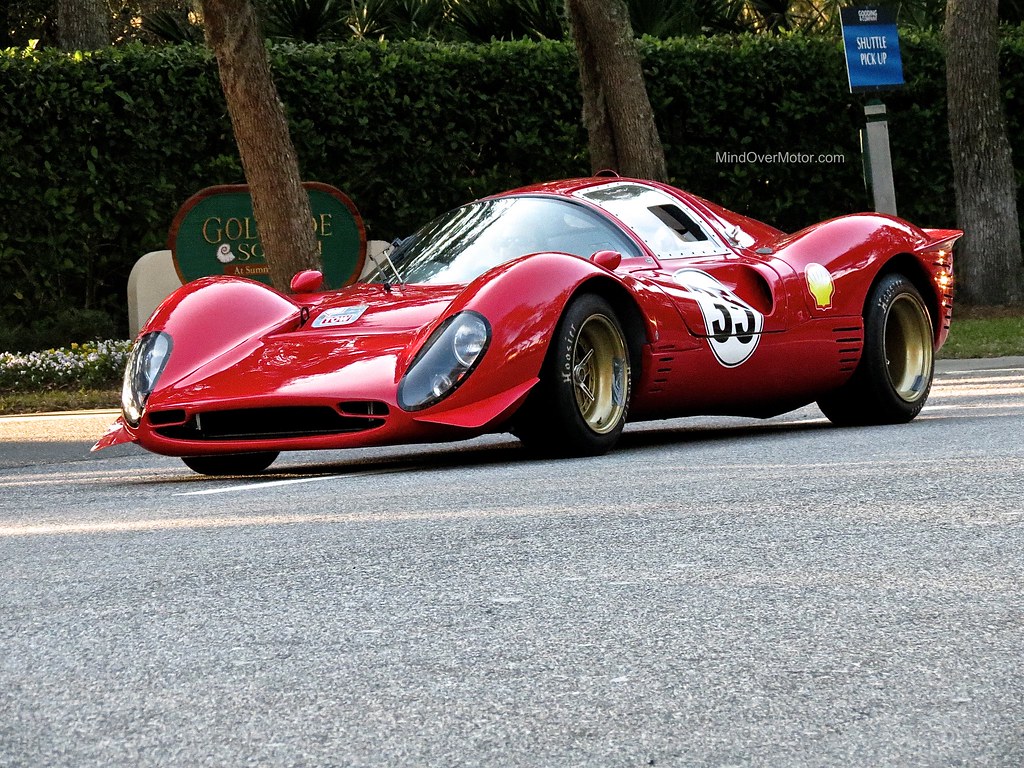
These are a few random shots I took outside of actual events during the recent Concours Weekend on Amelia Island. As usual at events like these, there are all sorts of interesting things to be seen zooming around on the roads, or even in the skies. Enjoy.
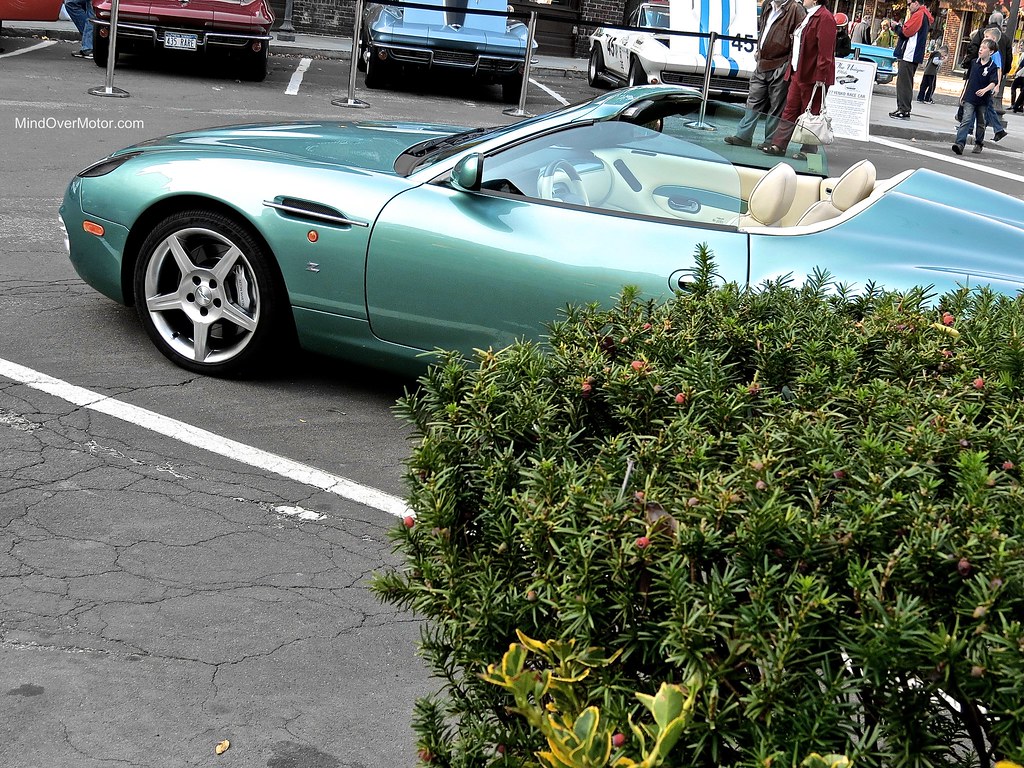
I am generally a fan of anything with the Zagato name on it, but I have a special love for the Aston Martin DB AR1. It is probably my favorite modern Aston because it has such depth to its appeal. Obviously the stunning, absolutely gorgeous Zagato bodywork counts for a lot, but that is just the beginning. The DB AR1 is also a barchetta style roadster, with no roof at all. That means that you have to drive it the way it was meant to be experienced, with the wind in your hair and the thunder of that 6.0L V12 bouncing back to your ears off the trees. Speaking of its V12, which certainly makes a proper sound for an Aston Martin, it sends 435hp to the rear wheels through a manual gearbox. That may not sound like much by modern standards, but remember that Astons are about the total experience, not all out performance. 435hp is still quite a lot to play with, and the fact that the DB AR1 is a modern Aston with a clutch pedal means that it will offer the optimum amount of fun on those sunny occasions when you take it for a spin.
Now factor in the rarity. Just 99 DB AR1s were built, all for the US market. What you wind up with, in my opinion, is one of the most desirable modern Aston Martins yet made. It is a car that offers a profound experience, and that is really what you’re paying for in a car like this. I was blessed with the chance to shoot this DB AR1 this past Fall at the Scarsdale Concours d’ Elegance in New York. I took a quick look online and found two DB AR1s currently for sale, both with delivery miles in the range of $170-200k. That begs the question, would you buy a newer DB9, DBS, or Vantage, or would you have one of these? I’d go with the DB AR1 for sure.
Another great video from Drive: Chris Harris pits his supercharged Audi S4 against the mighty, V8 powered RS4. This illustrates the merits of forced induction well. For just a few hundred dollars, you can make your car quite a bit faster than stock. Sure that naturally aspirated responsiveness is great, but I’m happy to trade that for easy, and massive, performance gains.
Jaguar has quite a storied history with regard to sporting automobiles. The E-Type is still remembered and revered as one of the most beautiful cars ever made (even Enzo Ferrari admitted to this at one point). But, this story isn’t about the E-Type, or the XJ6, or the modern Jags that people lust after. This is about what I see as a potential diamond in the rough–the last generation of the venerable Jaguar XJS, a car that I think is a bit overlooked. Continue reading Secondhand Saint: 1992-1996 Jaguar XJS→
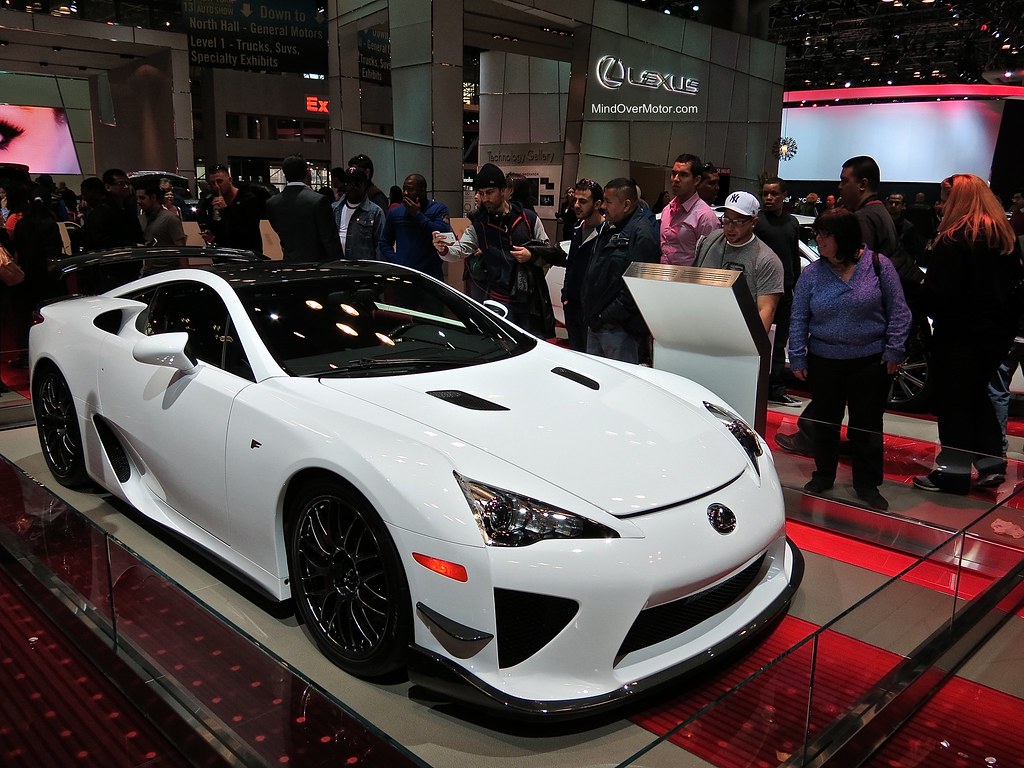
There were many new cars revealed at this year’s New York International Auto Show. I was in attendance for the Preview Night last Thursday, where I had access to many new cars, both those revealed at the show and those from recent shows. Like every event I go to, I covered what caught my eye. As many of you may know, I don’t do news in the proper sense because I like to be a little more authentic. What follows are my impressions of the cars as I saw and experienced them at the show, and my opinions of them overall. Enjoy, and please let me know your thoughts on any of them in the comments.
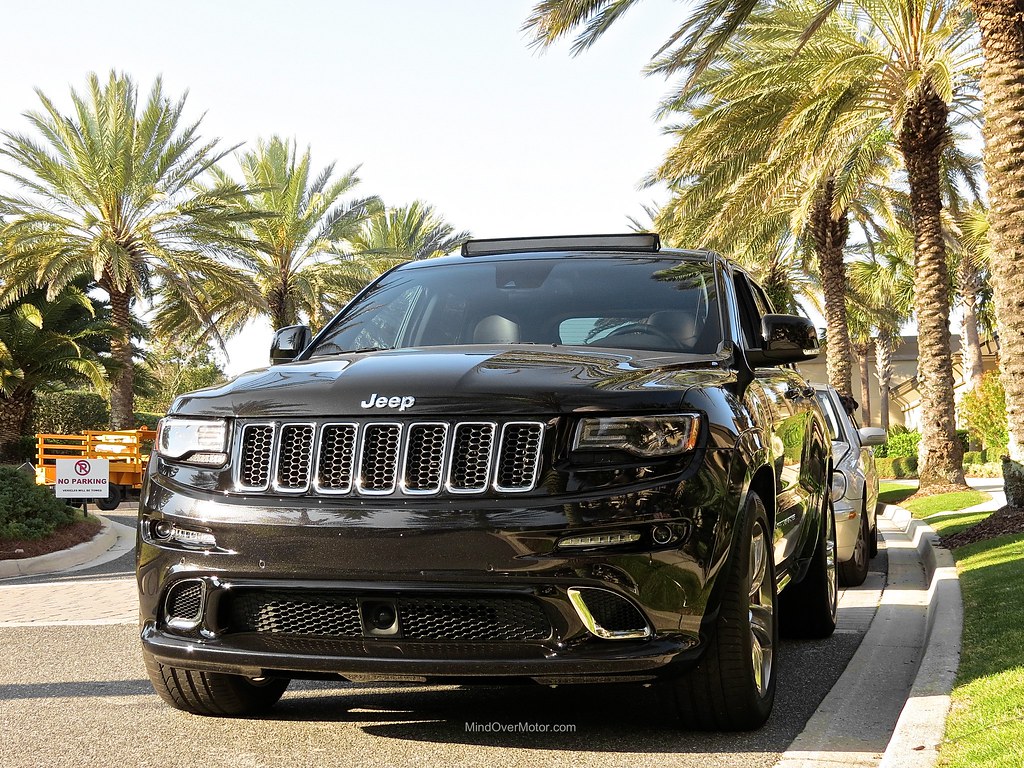
When most people think of Jeep, they think of Wranglers plowing through mud and climbing over rocks. They don’t, however, think of a 470hp V8, 0-60 in 4.6 seconds, and surely not of a $65,000 price tag. Meet the 2014 Grand Cherokee SRT, a different sort of Jeep.
It caters more toward the realistic type of SUV buyer here in America, one who will probably never forge a stream in their life, but still wants a big car to go to the mall in. Understanding this sort of buyer will help you understand why the Cherokee SRT exists. The fact is, most buyers use SUVs in the exact same way they would use a car, and they wind up wanting the same things offered in cars. Just look at the BMW X6. It is both an SUV, as well as one of those coupe-sedan thingys, like the Mercedes CLS. Personally, I think the people who buy a vehicle like an X6 exude an especially repulsive level of vanity, but somehow BMW manages to sell enough X6s to make it worthwhile.
This sort of clientele purchasing SUVs has inevitably taken the emphasis off of off road ability, and put it on more traditional, car like, aspects. The result has been new SUVs that are basically just big cars, and it was only so long before someone said “Hey, can I have a fast one?”
It is no secret that cars have been getting bigger. In BMW terms, the current 3 series is the size of an old 5 series, and the current 5 series might as well be a 7 series (it’s on the same platform). Audis too have been getting larger, although not to the same staggering degree as BMWs. Many of us enthusiasts now long for the way cars used to be, wanting the compact size and similar packaging as models that are 10 or 20 years old. Audi’s new A3, which will be hitting US shores, seems like it might be exactly what we are yearning for.
Specifically I want to look at the Audi S3, the hot and spicy one that we all really want. Looking at the details, it seems very similar to the B5 Audi S4 of the early 2000s. A car that is well loved by enthusiasts despite some rather large flaws. On paper the B5 S4 looks like a great car, with a 250hp turbocharged V6, all wheel drive, a good suspension, all in the package of a typical sedan. However, these S4s have had some pretty serious reliability problems, including turbos that fail around 70k miles and quirky electronics. The B5 S4 is a great car if you have the money, and patience to deal with its issues, but I think we all wish it didn’t have those issues in the first place.
Designed by Dr. Ferdinand Porsche, the SSK was Mercedes’ racing powerhouse from 1928 to 1932, winning a long list of significant victories, including the 1931 Mille Miglia in the hands of legendary driver Rudolf Caracciola. It also broke the pace record for the Mille Miglia at the time with an average speed of 62mph(101km/h). The SSK was seriously fast, in fact it was the fastest car of its time. Its top speed was 120mph (~190km/h), and the performance from its 7.1L straight 6 engine is still decently impressive by today’s standards. The key was its supercharger, which engaged via a clutch when full throttle was used. This design gave the power when it was needed (especially at higher altitudes, where air is thinner), but also helped keep the car reliable by not having the blower stressing the engine all the time. From what I’ve read, around 170hp was available before the supercharger engaged, and 225hp hit when the boost came on. I have also seen some reports of SSKs making as much as 300hp, so maybe in different specifications were used for different races. The car also had a massive amount of torque, with as much as 500ft/lbs available on those highest spec’d cars. Keep in mind, all of this performance is in a car with 1920’s technology, so tires, brakes, suspension, etc were all nowhere near the level of a normal modern car, and the SSK weighed nearly two tons. Racing back then took some serious bravery.
The SSK you see here was on display at the Mercedes-Benz Museum in Stuttgart, Germany, during my trip to Europe last year. Regrettably, I don’t have too many details on this specific SSK because I was so focused on taking photos that day that I didn’t bother reading the signs. I do know there were only 30-35 SSks built, so it is very rare, and definitely worth a few million dollars.
I love looking at early racing cars because there is so much crude genius. All of the performance aspects of a modern car had to be developed, usually through trial and error, and driven by competitive spirit. The SSK was the pinnacle of automotive technology in the late 1920s, and it marks a significant moment in racing, as well as in the development of the automobile itself. Enjoy the pics.
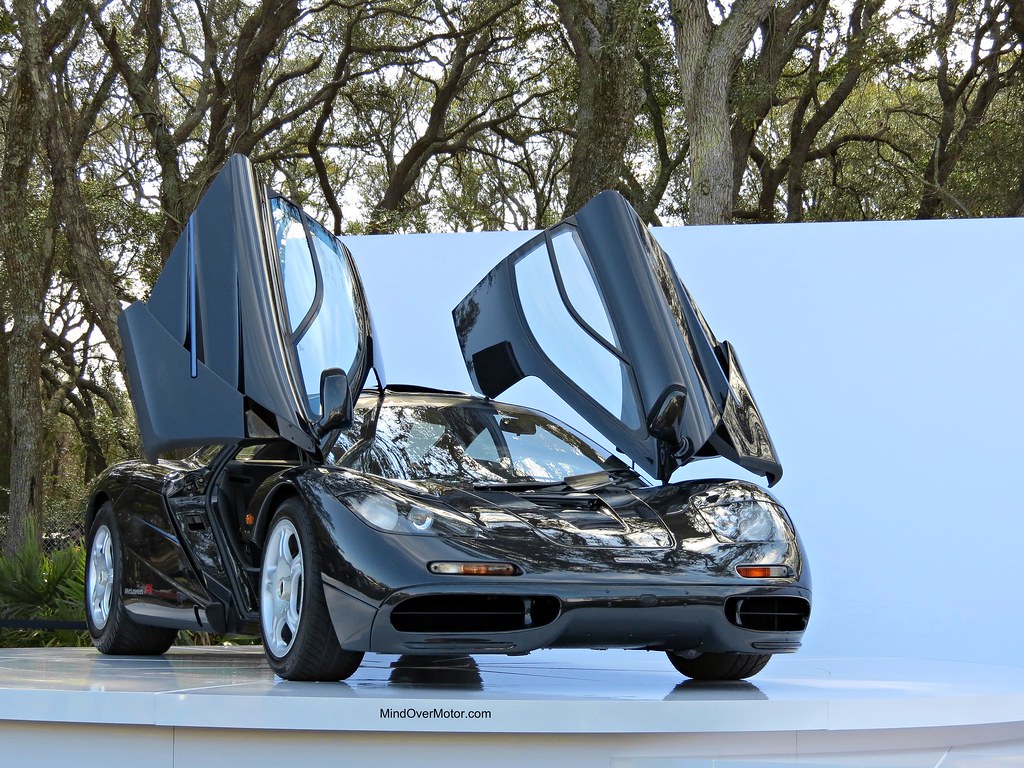
The McLaren F1 is a legend among legends. Even at an event like the 2013 Amelia Island Concours d’ Elegance, where legendary cars are all around you, the F1 leaves a strong impression. It was the fastest production car in the world for more than a decade, and still holds the top speed record for a car without forced induction. On top of that record, the racing version, the F1 GTR, was extremely successful, and even won the Le Mans 24hrs outright in 1995. Gordon Murry’s brilliant, compact design is still quite ingenious by modern standards. With its 3 seat (center driver) layout, and dual storage compartments aft of the doors, the McLaren F1 remains far more practical than most modern supercars.
There hasn’t been anything quite like the F1 since it’s day. Of all the cars that have claimed to be an “Formula One car for the road”, the McLaren probably offered the closest experience to a Grand Prix car of its time. It is a true driver’s car, with no traction/stability control helping you to manage its 6.1L BMW V12. A mighty 627hp is sent to the rear wheels, and the car weighs just 2425lbs. The F1 is a car to be driven, not merely seen in, so Hollywood poseurs need not apply (Go get a Bugatti like everyone else).
This is only the fourth McLaren F1 I have had the pleasure to see in person. Its legendary status has surely grown over time, and will continue to grow as only 106 examples (road cars and race cars) were ever built. The F1 was the first car to cost over one million dollars brand new, and now it is worth three or four times that much. It’s value likely will only continue to appreciate, because it has a historical significance adding to its objective value as an incredible performance machine. Enjoy the gallery, and think to yourself, “Maybe one day…..”
Controversy isn’t rare when it comes to the automotive industry. There’s not a manufacturer on earth that hasn’t made something that, to put it nicely, didn’t quite stick. However, I think it’s fair to say that we’ve not seen such a controversial topic as Porsche’s new 991 GT3 for quite some time.
Now if you’ve for some reason had your head fully submerged in a pit of mud, let me explain why this new GT3 is so controversial. Recently, Porsche has been equipping it’s freshest sports cars with the company’s own PDK gearbox. Along with the new electric power steering, Porsche’s latest creations have received quite an earful of complaints from nostalgic Porsche fanboys concerning the paddle-shifters located behind the shining steering wheels. And when Porsche came out and said that the new GT3 would also be equipped with the PDK twin-clutch gearbox, the automotive world’s close followers erupted into an immense amount of complaints about the car.
Even after evo magazine released an almost twenty minute long interview with Porsche GT3 head Andreas Preuninger, and other online magazines also did their best to convince the growing population of groaning car enthusiasts that the car could still be great, many still remained unconvinced (keeping in mind that no one’s actually driven the car yet).
However, the new GT3 is not alone. It seems that the conversion of manual ‘box cars to semi-automatic, paddle-shifting machines is a growing trend in the realm of sports cars. Car after car, more and more companies are pressing on and equipping drivers with the flappy paddles as standard, and sometimes, it is the only option. So, taking this into careful consideration, what can be said about the future of the sports car? Where will manual ‘box cars be within the next two decades? Where will paddle-shifting cars be within the next twenty years? It’s a growing concern among many, and they’re all dying to find the answer.
On this episode of Drive, Chris Harris shows all of us not only his spectacular driving skills behind the wheel of AMG’s newest monster, the SLS Black Series, but also the lengths that Mercedes-Benz went to lighten up the big supercar to make it more athletic and more fun on the track. Take ten minutes off and watch this video–it’s ten minutes well worth your time.
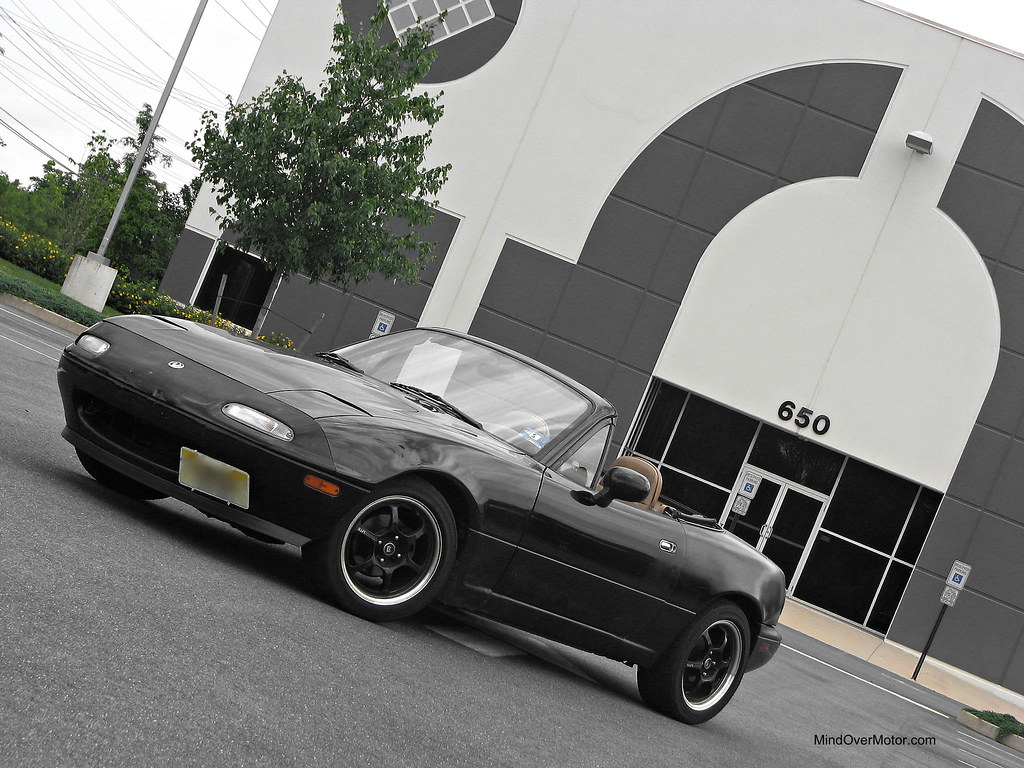
Today was the first day of Spring, and the weather, while still a bit chilly by most standards, was nice enough to take my MX5 Miata out for some roofless fun. I met up with my friend Dan, whose photos have been featured on this site many times, and we went for a nice long drive, two Miatas tearing hard through the woods. This was one of those days where you just forget everything else in your life, and enjoy cruising along. For me, such cruising is like a form of meditation, very in the moment, and focused on enjoying the little things in life. An MX5 allows you to enjoy the world even more, because with the top down you are truly outside, connected with your surroundings. Toward the end of the drive I had a huge grin on my face, and I got to thinking about exactly what it is that makes this car so great, for so many people. Continue reading Mazda MX5 Miata, the enthusiast’s Ace in the hole→




 Mind Over Motor