Autocar’s Steve Sutcliffe takes the new Lexus RC F for a spin. Looks like a lot of fun!
-Nick

Pictures and videos showcasing cars we love. Just for fun.
Autocar’s Steve Sutcliffe takes the new Lexus RC F for a spin. Looks like a lot of fun!
-Nick

Recently, I featured “Dodgezilla” on Mind Over Motor. Well, here’s another 1968 Dodge Charger, but this one is a completely different animal. It’s tame, bred in captivity, as opposed to being fed steroids through a funnel down the carb. This ’68 is a regular Charger with the 383 big block V8, a four-speed manual transmission, and all of the lines that made the ’68-70 a heartthrob both then and now. This white example sported a red interior–a bit unusual for a Charger, but considering that this one was restored as more of a cruiser than a bruiser, that’s perfect. This was a brutally cool car in its day, and the Charger’s aura has aged well, rather like a fine wine. Enjoy the photos. Continue reading 1968 Dodge Charger at the New Hope Car Show
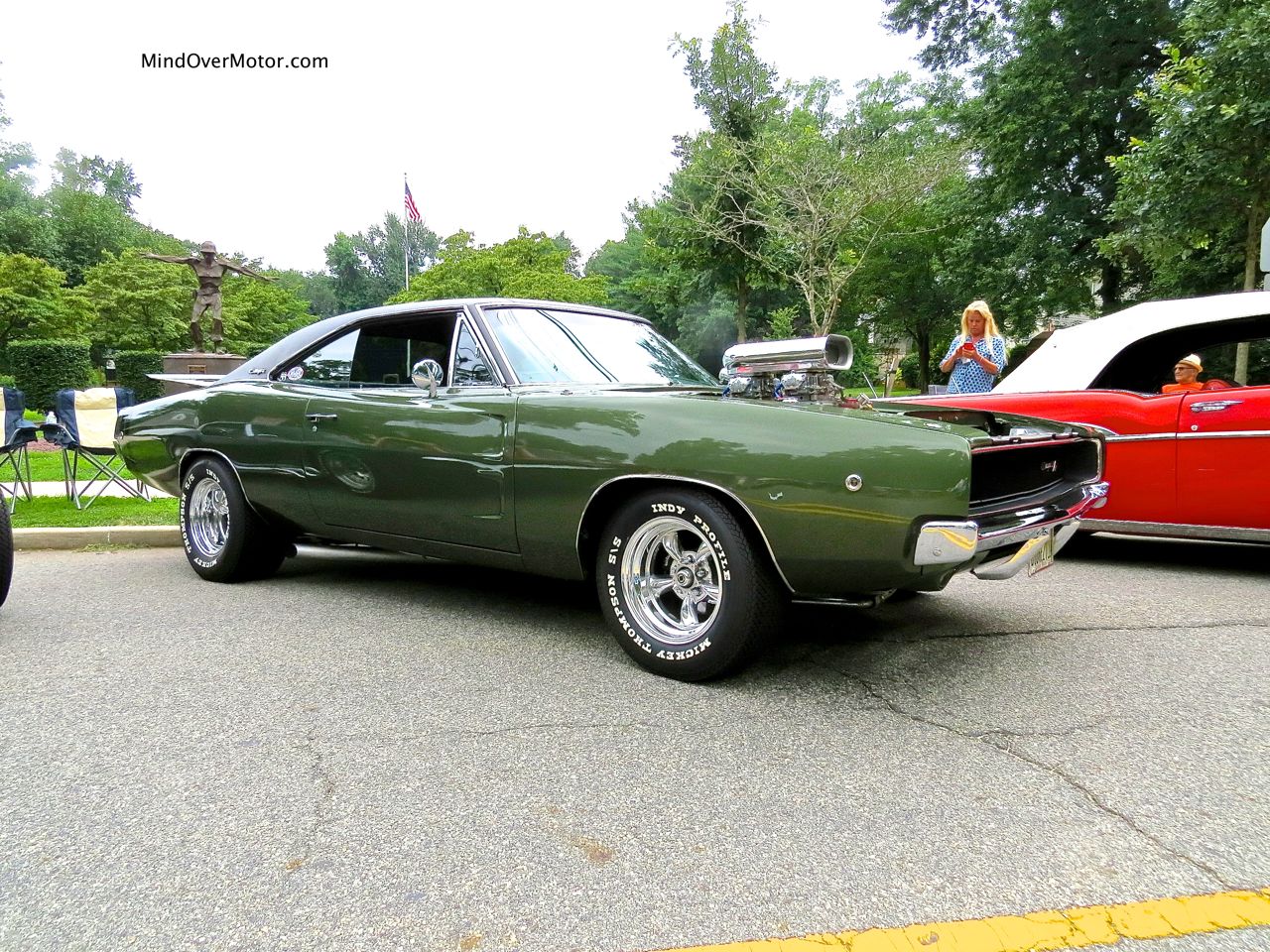
I’m a sucker for the second-generation Dodge Charger. Produced for a scant three seasons, it’s a representation of the Charger at its very best–a bruising, but sexy muscle car with equal parts testosterone and paunch. It’s difficult to improve these cars…but the owner of this absolutely evil ’68 has managed to do it. With its dark green finish and matching interior, the lines were well-represented on the exterior, but the lack of a hood belies this car’s true intentions. The owner calls it “Dodgezilla”. I couldn’t agree more, especially in green. In the place of a small-block V8 typical to this particular car lies a stomping 440-cid V8, with twin carbs and a high rise intake below the enormous hood scoop. This is not a Dodge for the faint of heart. It may not be terrorizing Japanese workers and tearing down buildings, but it’s green and looks like it’s up to no good anyway. It’s not Godzilla. It’s Dodgezilla. Enjoy the photos. Continue reading Say hello to “Dodgezilla”, everyone, the monster of the River Edge Car Show.
Jay gets his hands on Dodge’s new beast, the Challenger SRT Hellcat. Feel the fury of 707hp!
-Nick
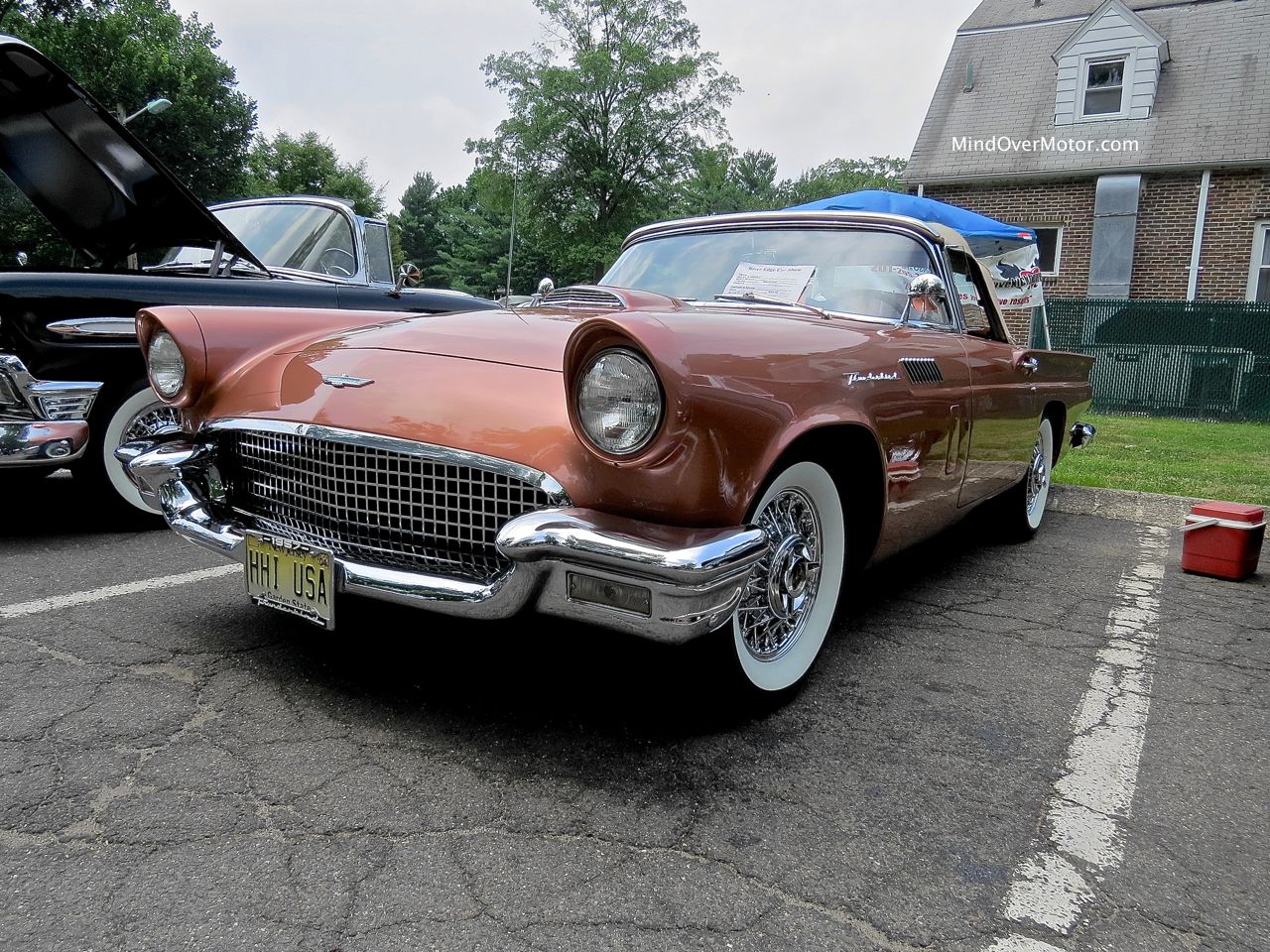
The early Ford Thunderbird was a completely different animal to the four-seat tanks that followed it which launched the personal luxury coupe industry in 1958. The first three years of the Thunderbird were a small two-seat convertible that was aimed right at the Corvette. Why Ford ever changed it is beyond me, and my favorite example, the 1957 model, was right here for the taking at the 2014 River Edge Car Show. I was pleasantly surprised to see one in this gorgeous dusk rose color, despite the lack of a hardtop and the lack of the standard wheel covers. In fact, the Kelsey-Hayes wire wheels with tri-star knockoff caps on the centers looked excellent in the cloudy July sky. As the sky cleared up, the metallic paint finish became a blinding source of simple beauty. Ford knocked one right out of the park in ’57 and then, despite making a more profitable model in 1958, ruined the potential of having a true Corvette competitor. As a result, the 55-57 Thunderbirds are worth a large amount of money, and it’s pretty easy to see why. Enjoy the photos. Continue reading 1957 Ford Thunderbird at the River Edge Car Show

The year is 1959. Your boss has just reviewed your assessment on setting up a new development of suburban homes near a major interstate highway in small-town America. He’s very happy, closes his books, and gives you a 40% raise and promotes you to the head of your local developer office. As you walk outside to your four-year-old Buick sedan, you realize it’s time for a change. You’ve made it to the top of the heap in life, and you need a car to show your success. Only a Cadillac will do, and you’re determined to make a statement. So, you pick this one right off the showroom floor and show it to your wife and kids that night. Everyone is overjoyed at your success and they all love the new Coupe DeVille you’ve just bought.
Back in 1959, Cadillac was a true success symbol for most Americans. My great-grandfather had a few of them, and after my grandpa became a successful dentist in the 1970s, he bought one himself. The 1959 models are considered by many to be the most grandiose of the postwar Caddies, with the tallest fins ever fitted to an American car, stunning chrome and a set of colors some could only dream of seeing in the late Fifties. This particular 1959 model is a soft shade of pink with a white top, known as Persian Sand. This car is also equipped with an immaculate white interior and looked every single way of perfect. The ’59 always has been and always will be a crowd-pleaser car, and this one’s no different. Whether you fancy the chrome up front, the sky-high fins out back, or the hulking side profile, there is definitely something for everyone to enjoy on the 1959 Cadillac, and there’s certainly enough space inside to carry every single one of them. This car, as Jerry Seinfeld said on Comedians In Cars Getting Coffee not long ago about the ’58 Eldorado Seville, is “as thrilled with itself as you are.” I couldn’t agree more. Enjoy the photos. Continue reading 1959 Cadillac Coupe DeVille at the 2014 Greenwich Concours
I had goosebumps the whole time when I saw this video. The Ferrari 330 P4 is one of the most significant sports racing cars of all time, and this is the only remaining true P4 in existence. The other P4s were turned into Can Am cars, and Jim Glickenhaus owns the Ferrari 330 P3/4, the P3 that made the jump to P4 spec. So this thing is precious beyond belief.
This Petrolicious video will make your lust for the P4 almost agonizing in severity, because in addition to hearing its godly V12 howl, and seeing its timeless sexy looks, the owner tells us just how great it is to drive. Oh how I’d love for even just one lap in this car someday. Here’s to hoping…..
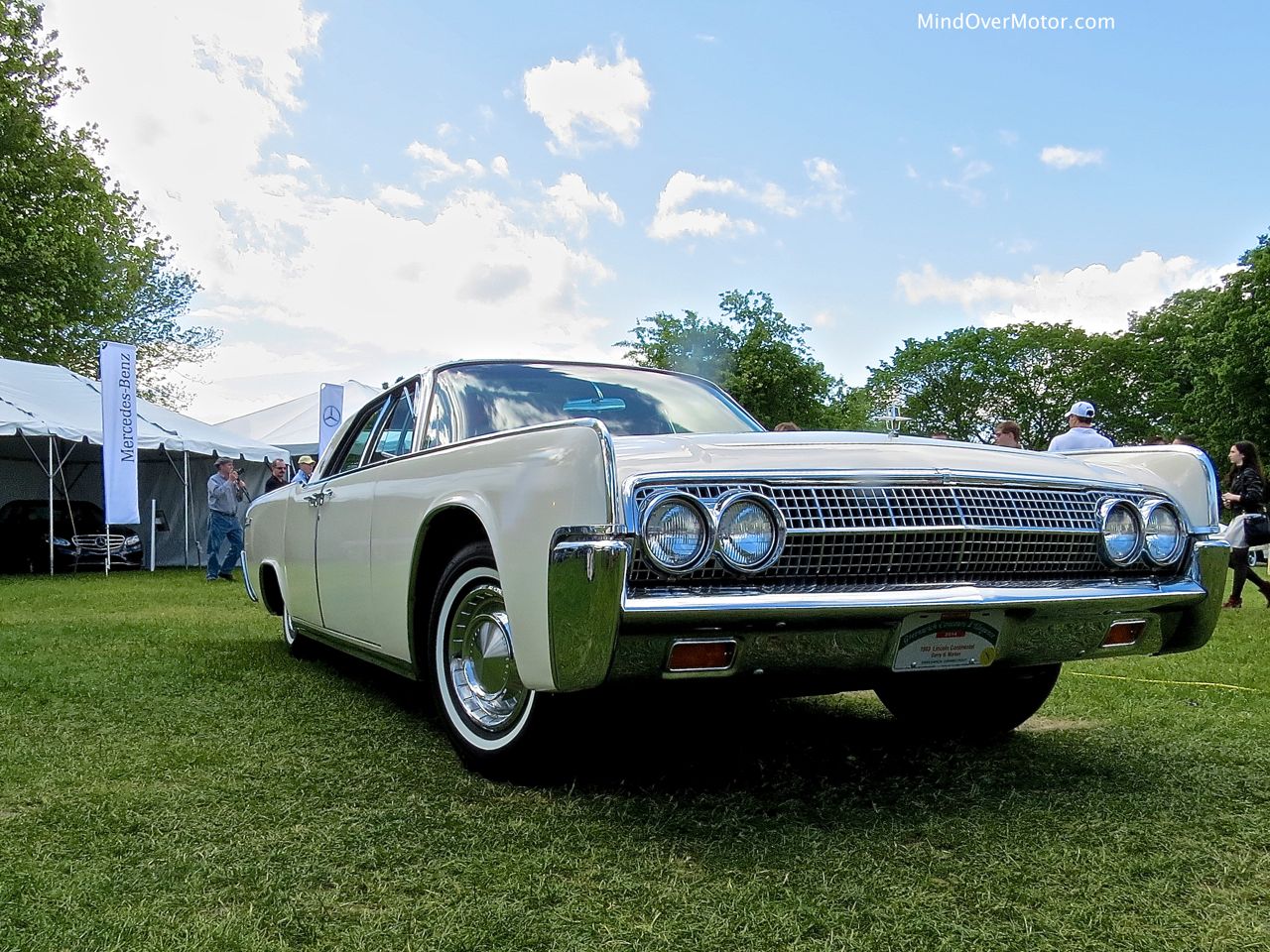
The Lincoln Continental was once a great marque. Lincoln needed to sell more product and in 1960, the Mark V was outdated and outclassed by its more modern rivals, so Lincoln was the first to take the plunge and shear off the tail fins. Lincoln told Elwood Engel, Ford’s design head at the time, to design something modern for their luxury product. He worked wonders, creating a boxy shape that became an instant classic. The suicide-doored sedan and corresponding convertible were chiseled and mature, and became the definitive Lincoln shape for a decade thereafter. This is probably my favorite year of the postwar Continental–1963. The angle of the grille and the ratio of chrome to paint up front are dead-on perfect and the upright top of the fenders shines through brilliantly. My grandpa had a convertible one of these in the early 1960s and remembers it fondly, just as I caught a glimpse into the past thanks to this example. The eggshell white paint may seem a bit plain to some but I think this is the consummate color for the Contiental of the Sixties. In fact, to me, no other color really captures the shape and the inner lines. The suicide doors, long since out of style by the time this body launched in 1961, have always looked perfect. Values have been healthy for this car for some time, and I can see why–this is easily my favorite Lincoln of the postwar era, even more so than the ones from the late 1940s. Enjoy the photos.
Continue reading 1963 Lincoln Continental Sedan at the Greenwich Concours

Anyone who has read up on their European history over time has probably heard of the Rothschild family. They’re known today as being much more low-profile than most would expect for being as wealthy as they are (the family is supposedly worth 500 billion dollars), but their control over the world’s wealth is known as a staggering truth. However, I’m not here today to talk about the entire family’s history. I just want to talk about this absolutely stunning car. This is a Cadillac–but it’s not just any old pre-war Cadillac. This particular French-market Cadillac 353 Cabriolet was owned by Baron Edmund James de Rothschild for a number of years. This custom-bodied behemoth is a four-door cabriolet with a full-folding roof, in separate sections for the chauffeur or the passengers. These versions are known as closed car (both sections closed), sedanca de villa (front section open), or an open tourer (all sections open).
Cadillac sold 14,995 cars in 1930, but less than one percent of them were bodied by custom coach builders (less than 150). This car is an aluminum-bodied, long-wheelbase, three position double cabriolet, a truly unique body style. The bodywork was performed by Georges Kellner et Filis and is the only known Cadillac he penned. Unfortunately, the Baron passed away just four years after the car was ordered, and it was kept thereafter at one of the chateaus owned by the family and used just for special occasions. In 1969, a noted collector named James C. Leake purchased it and had it restored ten years later. The current owner, the Richard Driehaus Collection, has not changed the car since acquiring it in 1998. Despite being an older restoration, this Series 353 looks absolutely stunning on the field at Hershey and I would be overjoyed to see it again soon, whether that be this year or in the future. Enjoy the photos of this legendary automobile. Continue reading 1930 Cadillac Series 353 Cabriolet at the Elegance at Hershey 2014
Here’s some fascinating automobile trivia for you. The inspiration for the legendary Ford Thunderbird (or T-Bird) came from a 1952 Ferrari Barchetta that was given to Henry Ford II by Enzo Ferrari. Yes, the two automakers had a long relationship before their famous falling out in the mid-1960s, which resulted in the Ford GT40. Just look at the styling of this one-off Ferrari Barchetta, especially the rear, and you will see the T-Bird in the making.
This one-off Ferrari currently resides in the Peterson Automotive Museum, and they let Jay Leno take it for a spin with his cameras rolling. Enjoy the sights and sounds of this machine that helped shape automotive history, because without this Ferrari, her daddy would’ve had to take away whatever else she was having fun, fun, fun with.
-Nick
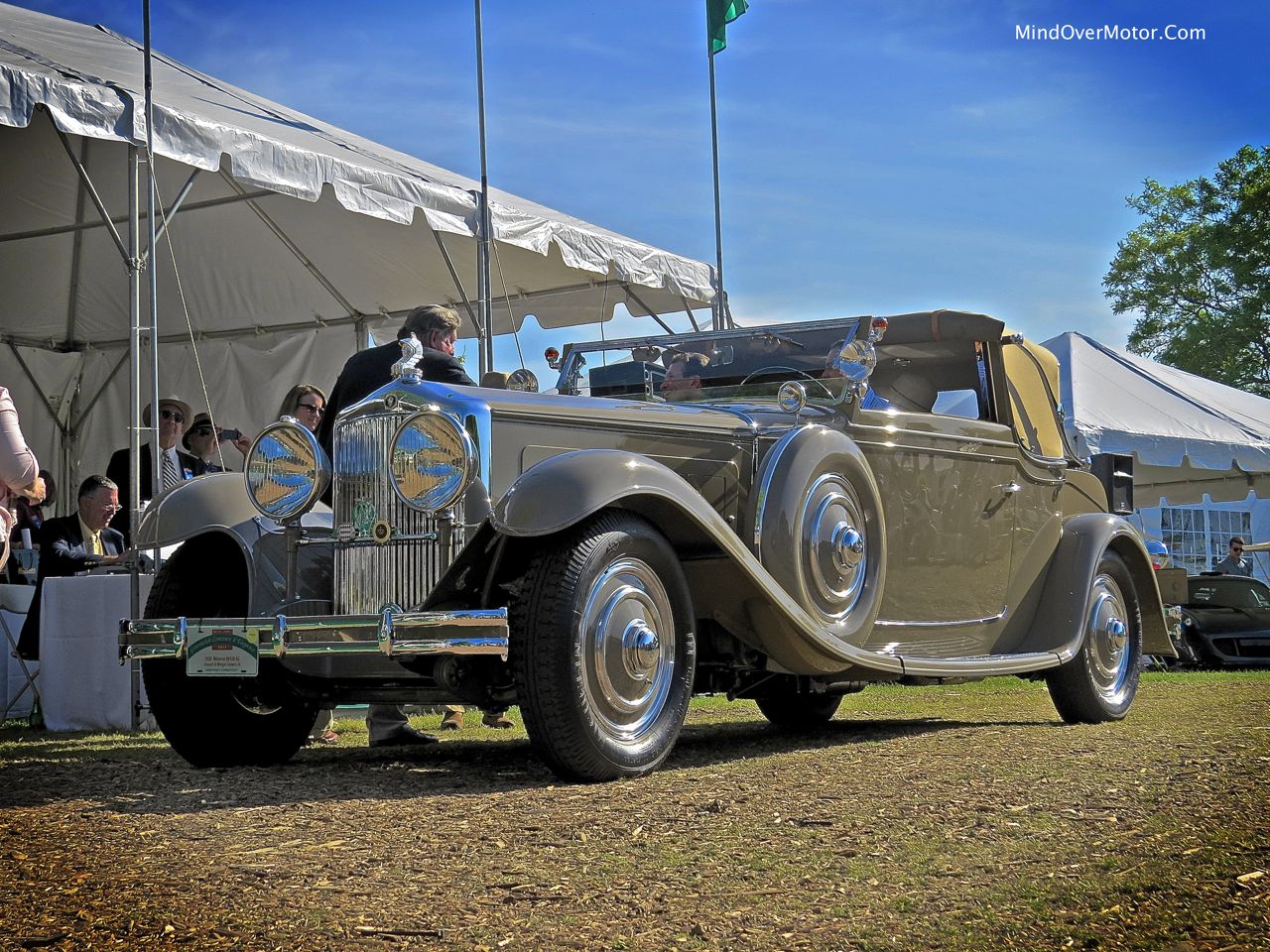
This year, the second day of proceedings at the Greenwich Concours d’Elegance was an example of great weather, good vibes, and gorgeous European and Asian automobiles from Great Britain to Belgium to the former Soviet Union. The Best Of Show winner was a car that captivated everyone who came near it with beauty, style, and above all, cold hard substance. The winner of Best of Show was this stunning Belgian-crafted 1930 Minerva 80138 AL, with coachwork by Vanden Plas. The owner is Judge Joseph Cassini III and his wife Margie Cassini of West Orange, NJ. Cassini is a recently retired judge with an excellent car collection that has won multiple awards. For instance, his 1934 Packard won Best of Show at Pebble Beach last summer, and his Horch 853 Special Roadster won Best Of Show at Greenwich just two years ago. He’s also shown a beautiful 1933 Duesenberg SJ at Hershey, which I had the pleasure of seeing last summer (it won Most Elegant American Closed Pre-War).
The Minerva, however, was the star of this show two Sundays ago. Finished in a pearl earth paint color, the bodywork is paired with a 6.6L straight eight sleeve-valved engine. Cassini claims that this is one of 8 surviving “AL” models with that engine left. Cassini’s opinion on winning the award with the Minerva was, “It’s pretty humbling to see it recognized for the work of art that it is.” He purchased the car at the Gooding auction at Amelia Island only a few months ago (fully restored) and is showing it for the first time at Greenwich. According to the auction house website (goodingco.com), this is a Pebble Beach and Amelia Island class winner and has won Best Of Show at other Concours events previously. After receiving his award, Mr. Cassini mentioned that he will be bringing another Minerva to the Elegance at Hershey this coming Sunday–specifically, a Rollston-bodied 1931 cabriolet sedan which I am eager to see up close. Many congratulations to Joseph and Margie Cassini for winning Best Of Show in the Concours International. Enjoy the photos. Continue reading 1930 Minerva 80138 AL: Best of Show Concours International at the Greenwich Concours, 2014
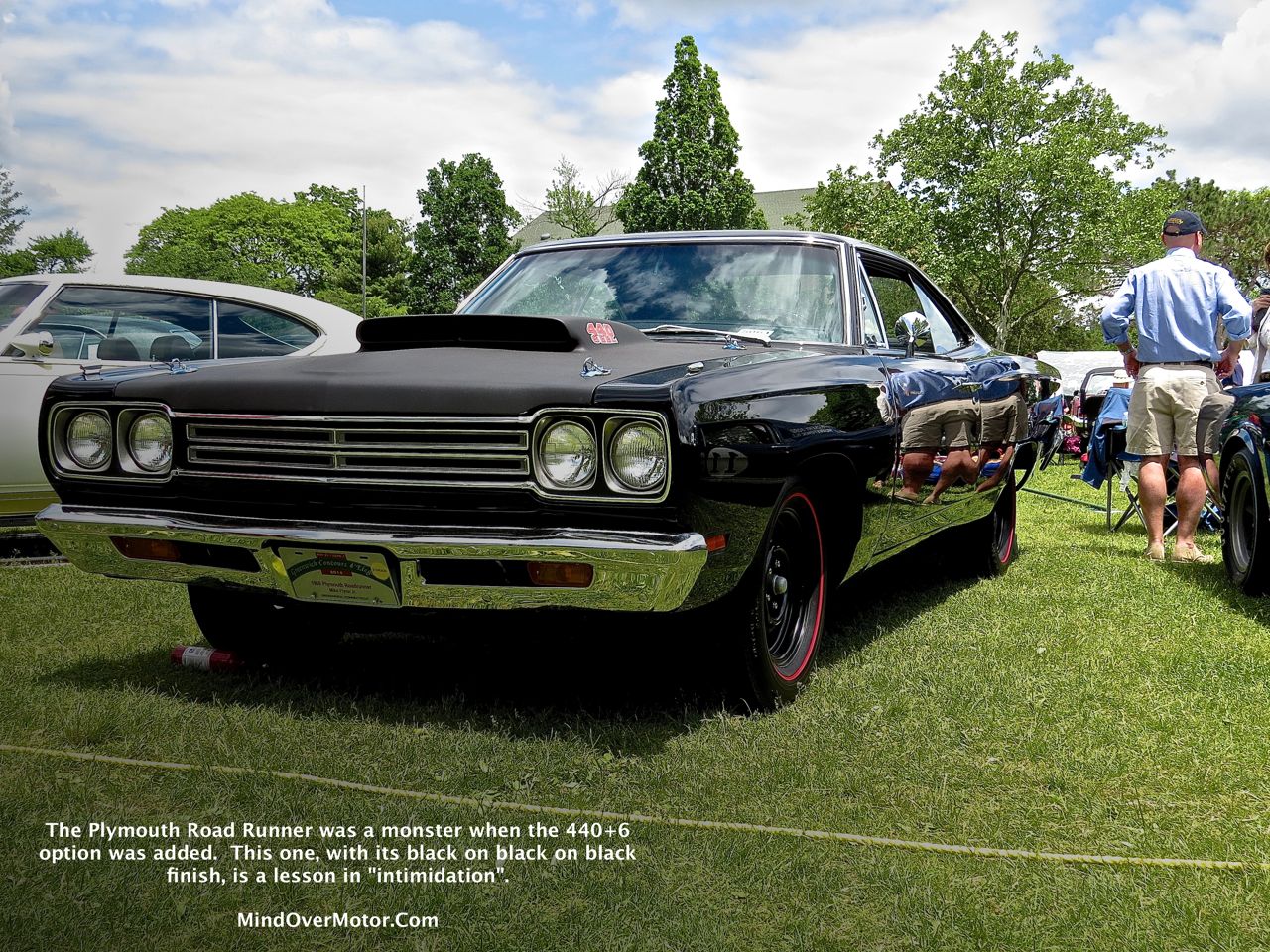
The Plymouth Road Runner was a legendary car in its own right. It launched in 1968 as a stripped out Belvedere with plenty of performance extras as standard equipment, an optional 426 Hemi V8, and a price low enough for a teenager to enjoy. In 1969, Plymouth improved the breed with a new front end, new taillights, new trunk trim, and new side marker lights.
However, halfway through the year, Plymouth decided to stop toying with the competition and dumped the 440-cubic inch V8 into the Road Runner coupe and hardtop. The M-Code package, as it was known for the VIN code, or the A12 package (on the fender tag), included the 440 V8 with a trio of two-barrel Holley carburetors and a bunch of go-faster goodies attached to the chassis. A Super Track Pack could be optioned alongside the 440 Six Pack to make this Mopar even more formidable on the street.
This engine also came with a sinister appearance package that added a flat black lift-off fiberglass hood with integrated scoop, hood pins, a set of black steel wheels with chrome lug nuts, and most of the brightwork deleted. This is probably one of the meanest looking muscled cars that Plymouth ever made and it happens to be a huge favorite of mine. Only 1,432 440 six barrel Road Runners left the factory in 1969, and this automatic-equipped one is a one-owner car that appeared at the Greenwich Concours earlier this month. So far, this is the first real 440+6 Road Runner I’ve had the pleasure of seeing in person. Enjoy the photos. Continue reading 1969 Plymouth Road Runner M-Code at the 2014 Greenwich Concours d’Elegance
 Mind Over Motor